Bohn HQ
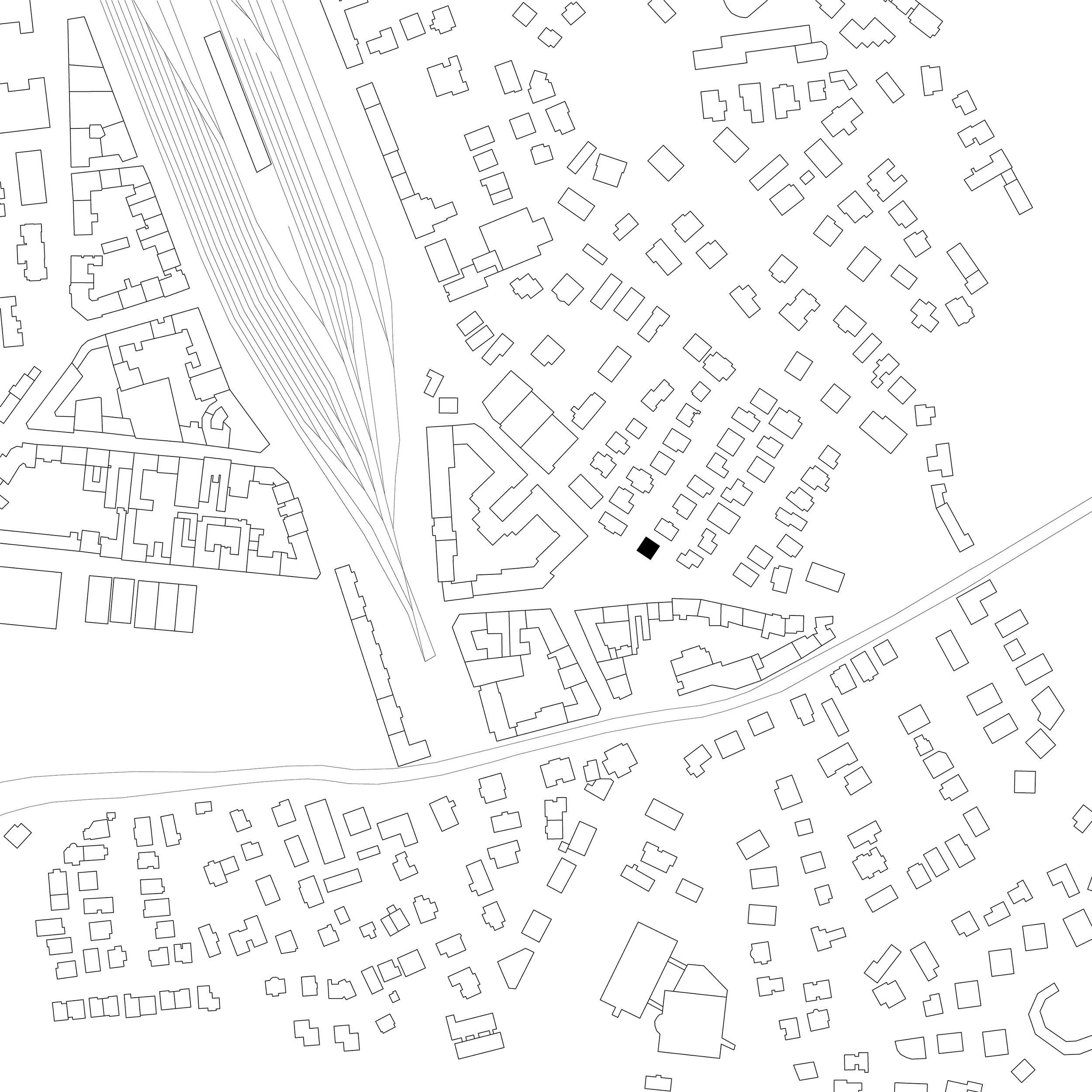
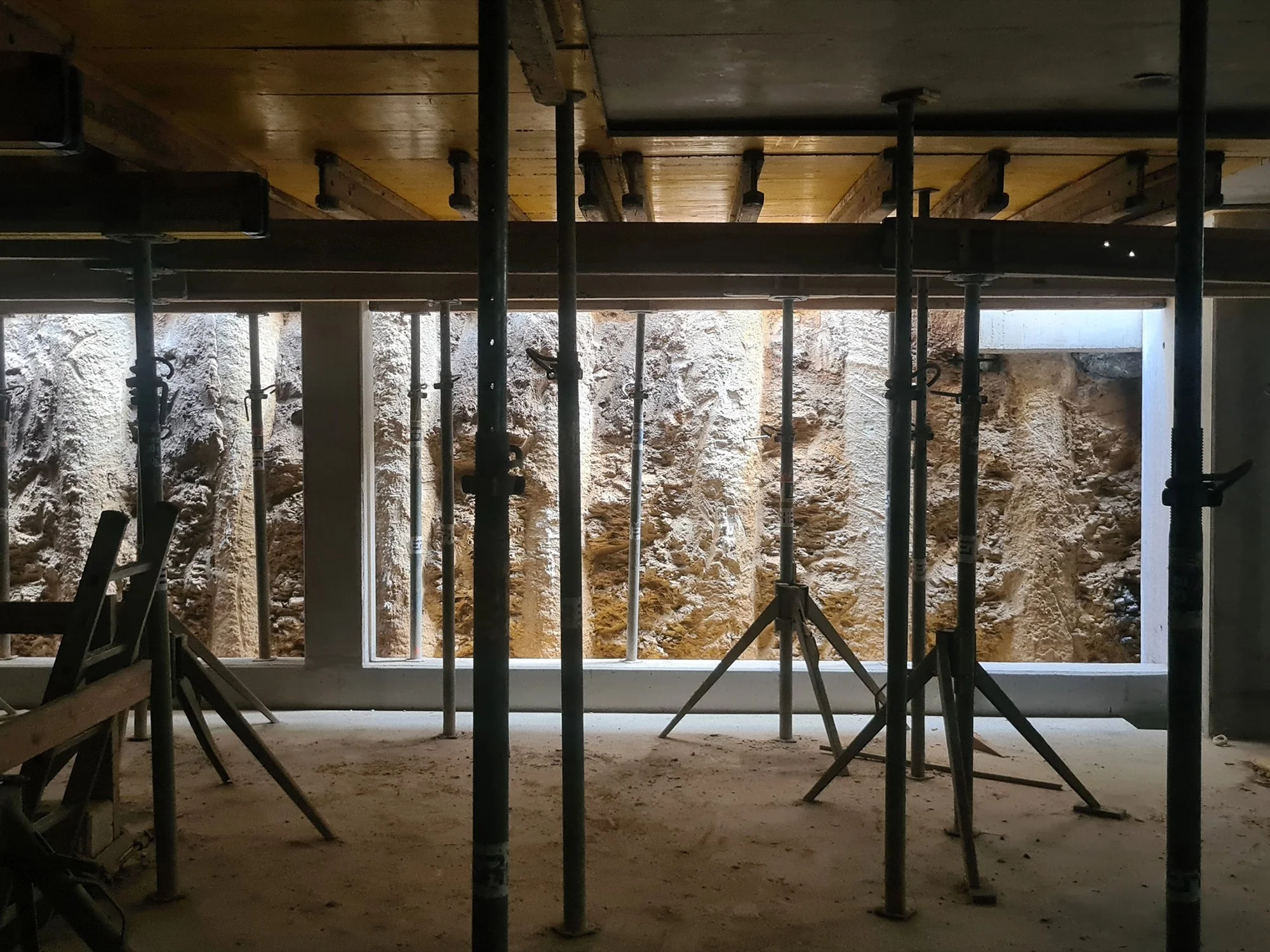
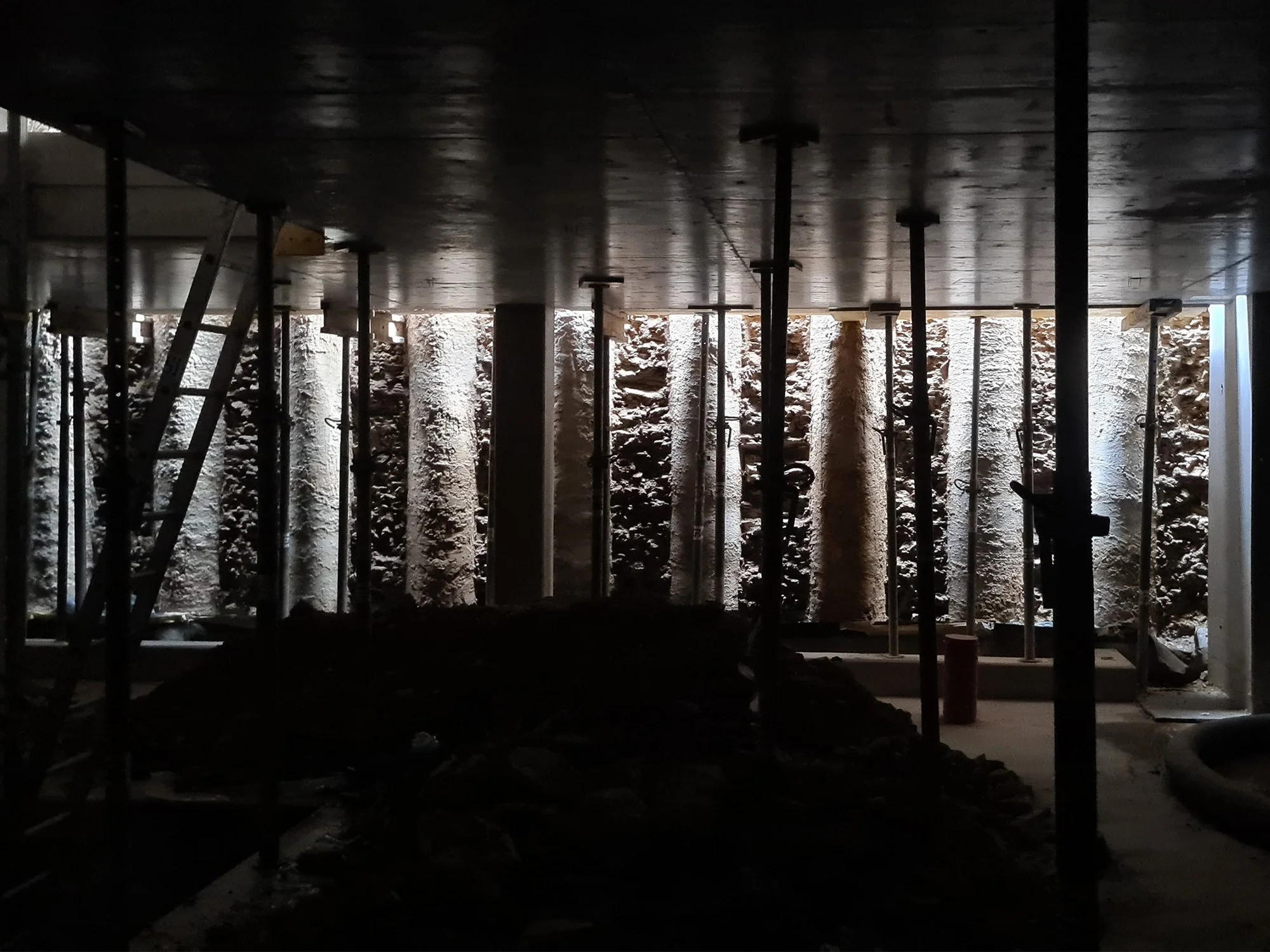
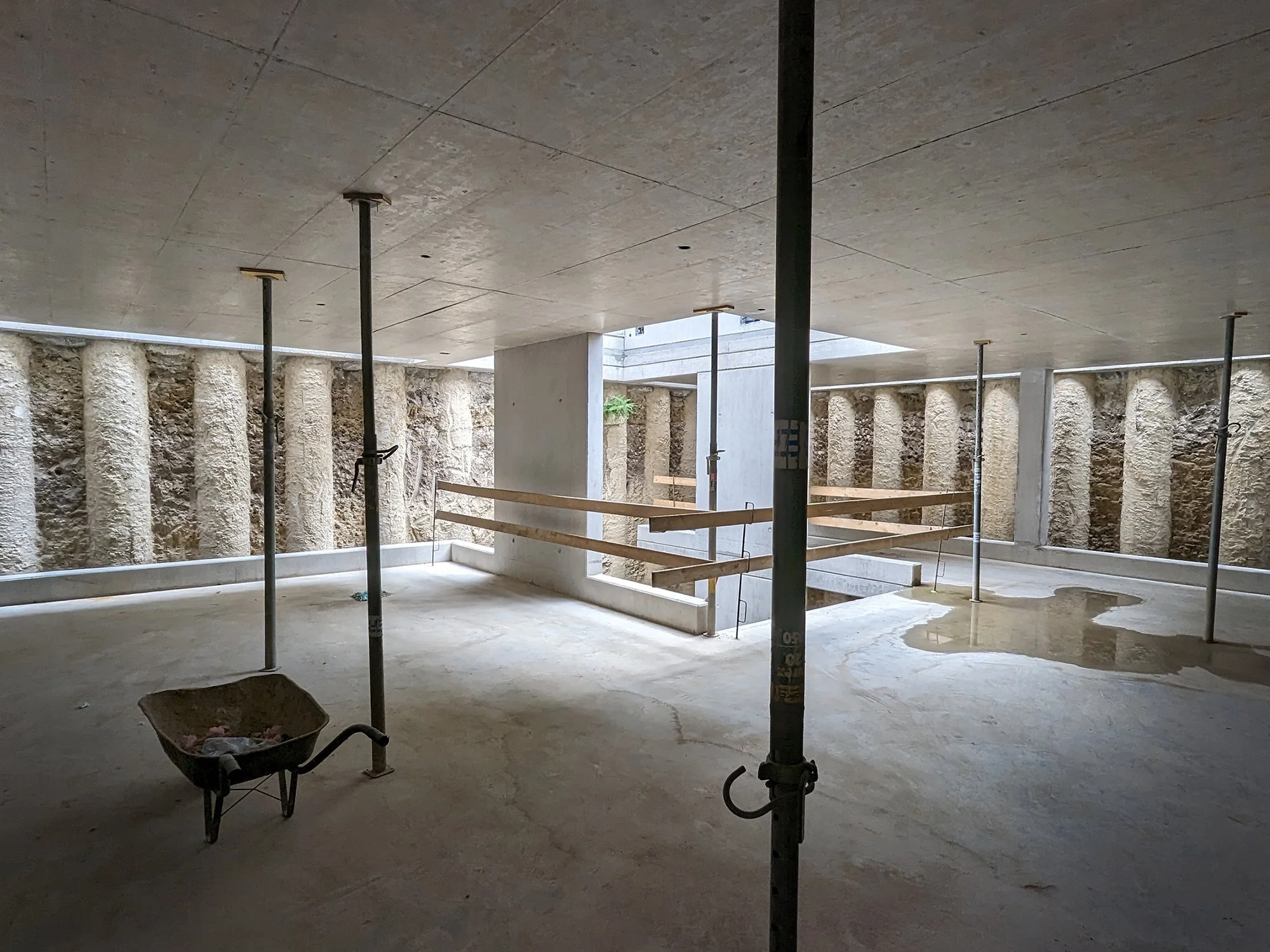
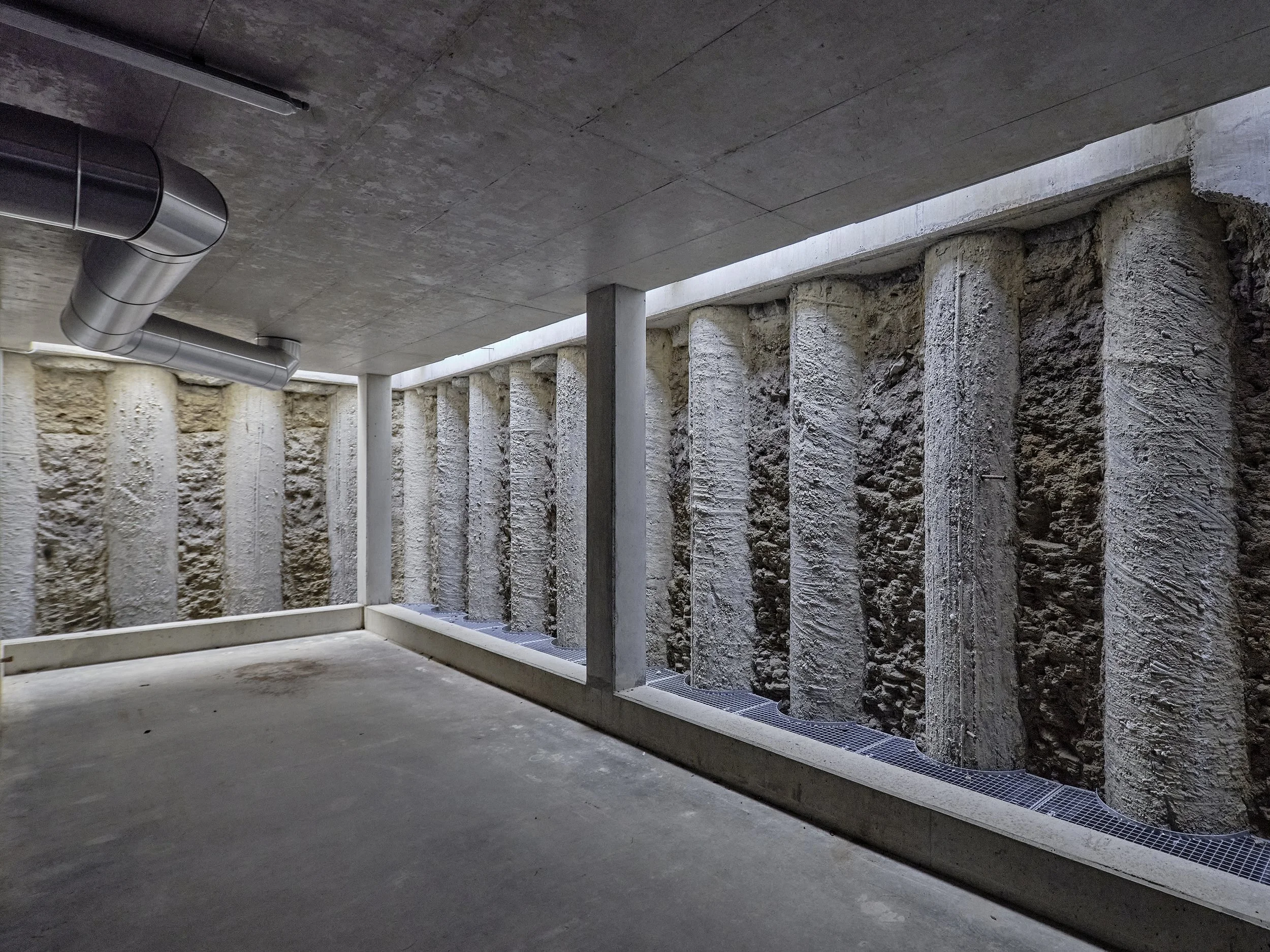
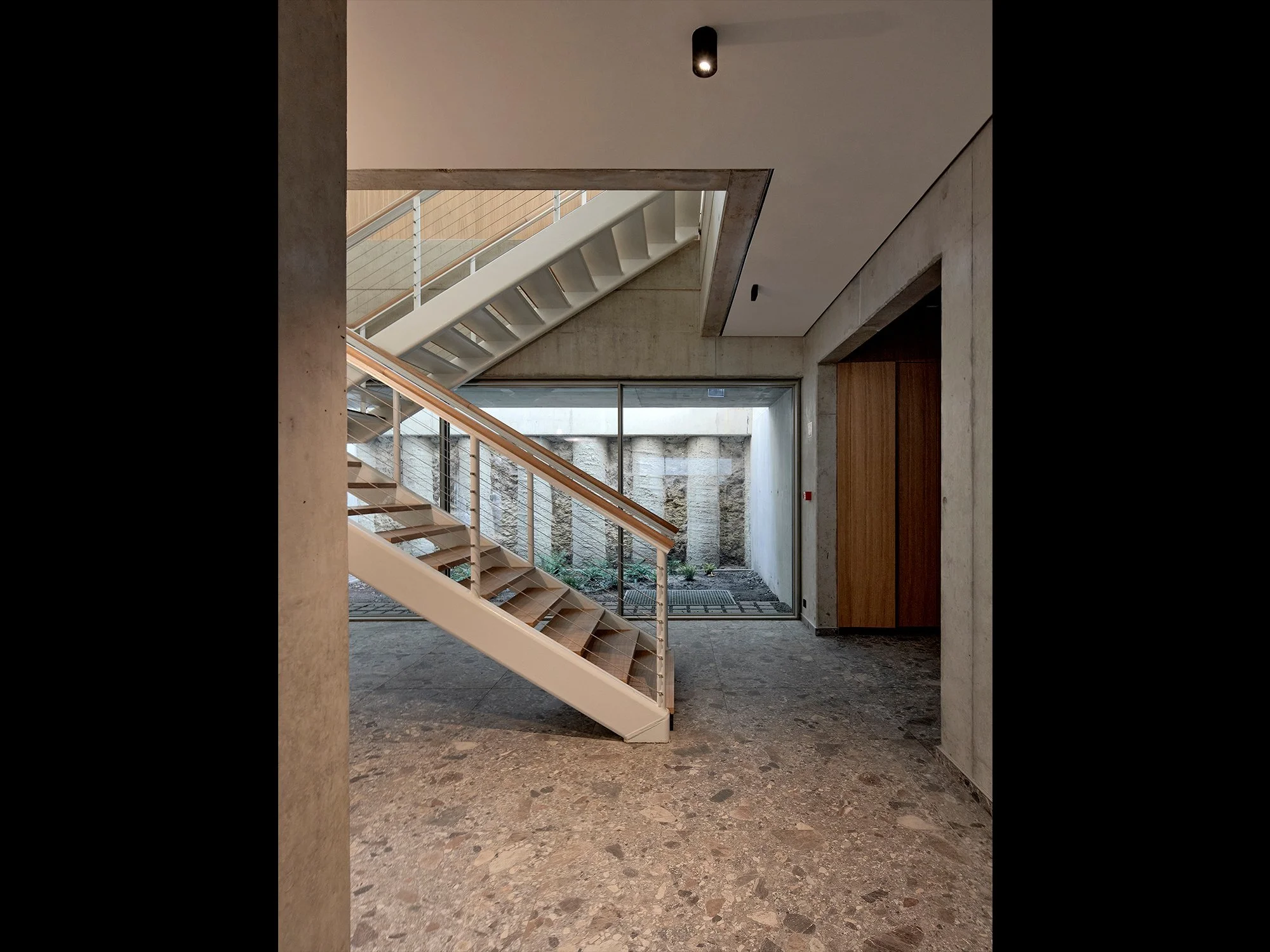
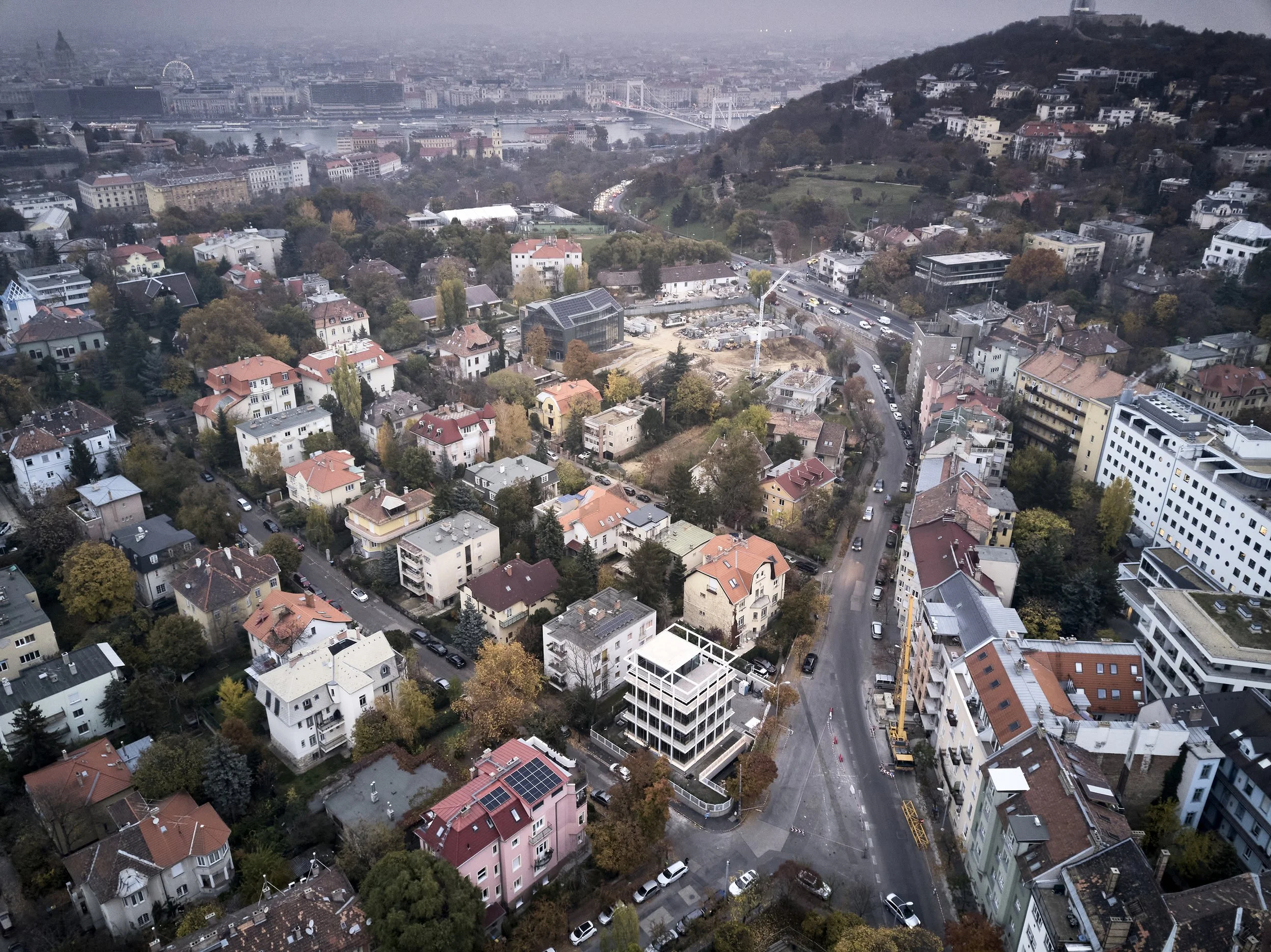
The task was to create an office building on this interesting place of the city for a family-owned company, well known on the domestic civil engineering market with a 30-year history which would reflect the results of their work done so far and would define the operations of the company for the next decades. Our work started with an open and unbiased spatial and urban analysis of the site, which was also required by the district's regulatory plan. Nostalgia aside towards the kind little house on the site, we mapped the building mass that could adequately fill the void in the urban fabric to relate both to the free-standing buildings immediately adjacent and to the larger urban walls on the other side of the square. On the other hand, the spatial extent of the design programme and its feasibility on the small plot were examined. It quickly became clear that the new building mass, which was considered appropriate for the urban context, would not be sufficient to accommodate all the necessary functions. Knowing the profile of the client's civil engineering design and construction company, the idea of "going underground", i.e. giving the typically subordinate spaces below ground level a greater than usual architectural and functional role, was thus almost immediately conceived. The idea of looking out directly through a wide opening of the concrete structure of the house toward the deep excavation support structure was born immediately, long before we knew what the façade of our house would look like.
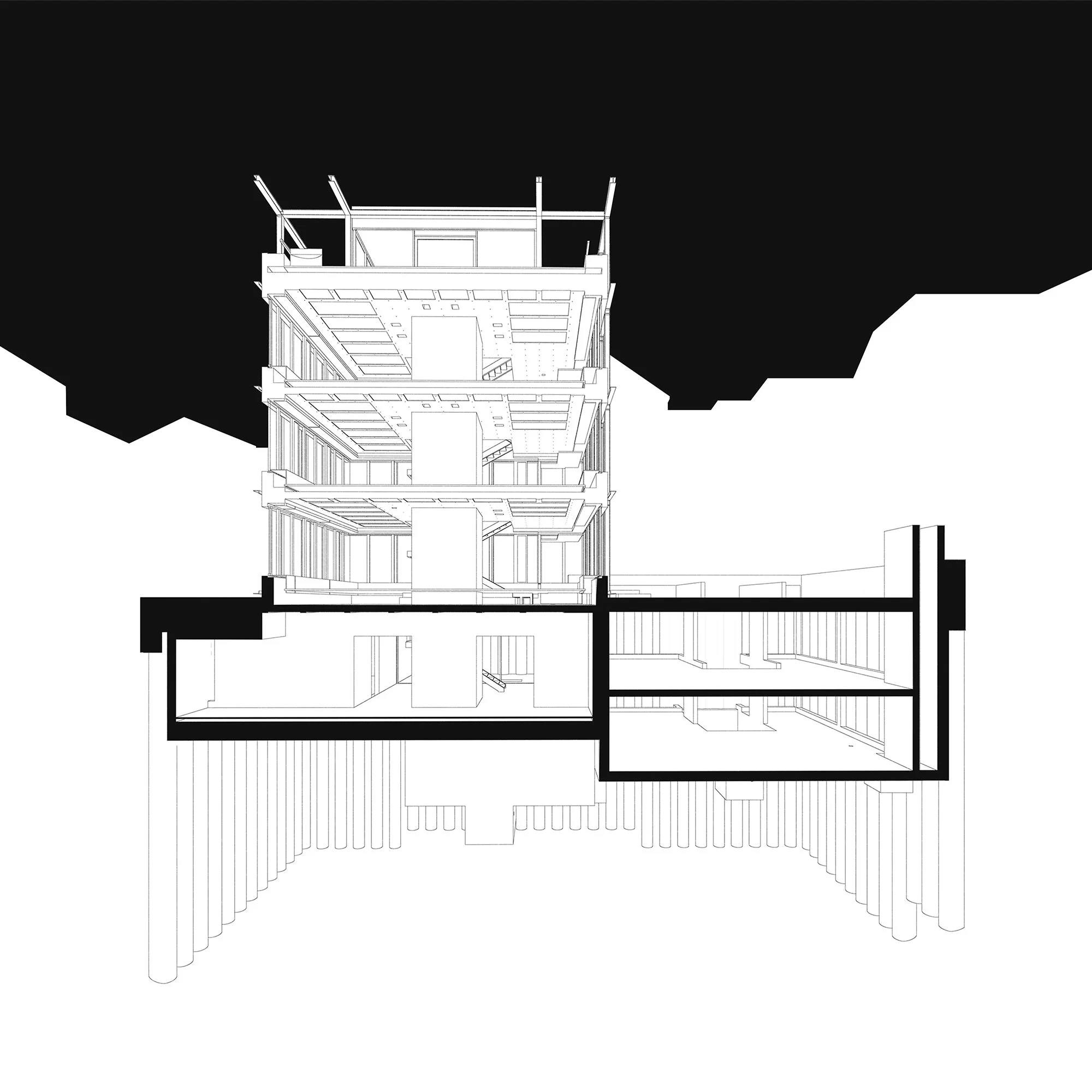
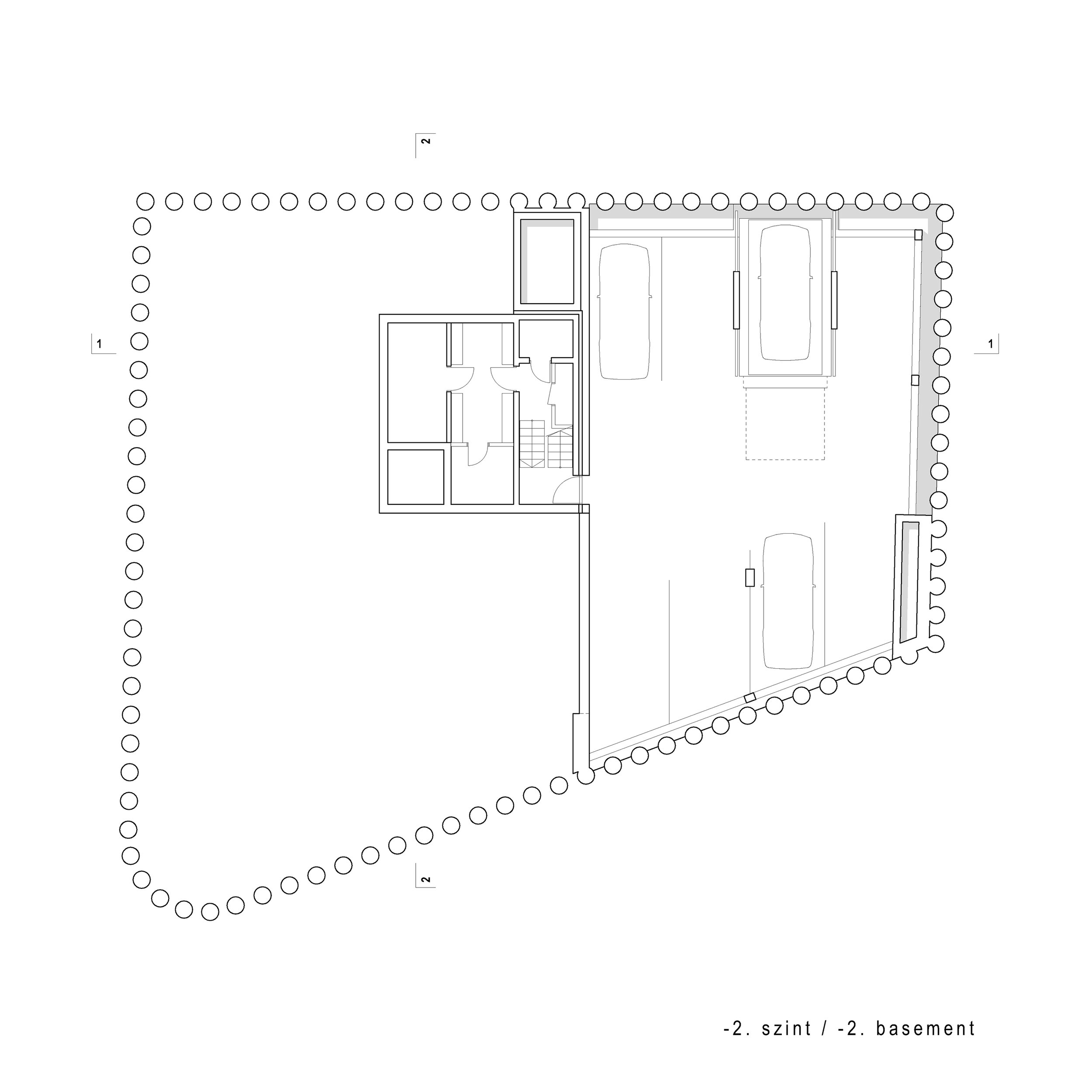
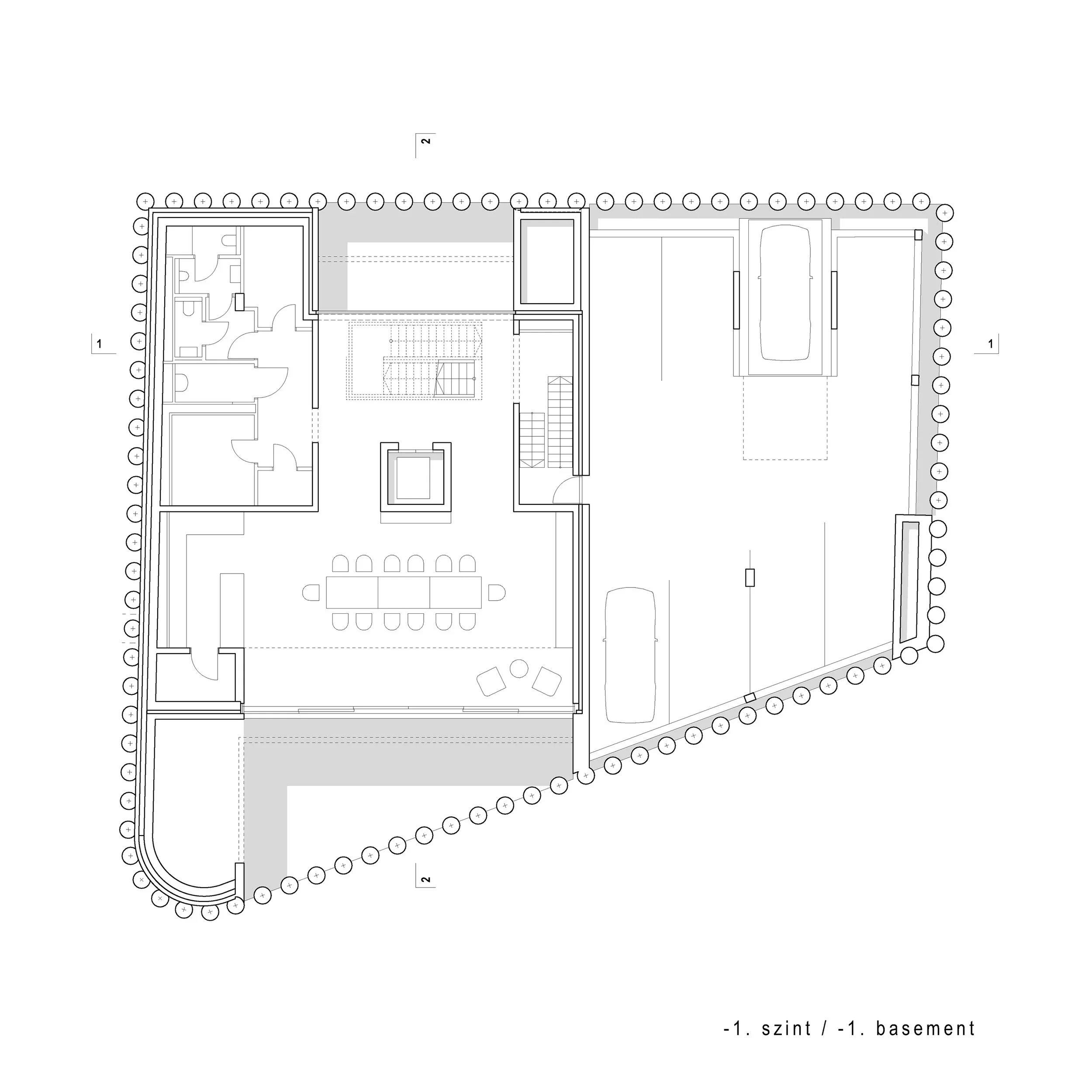
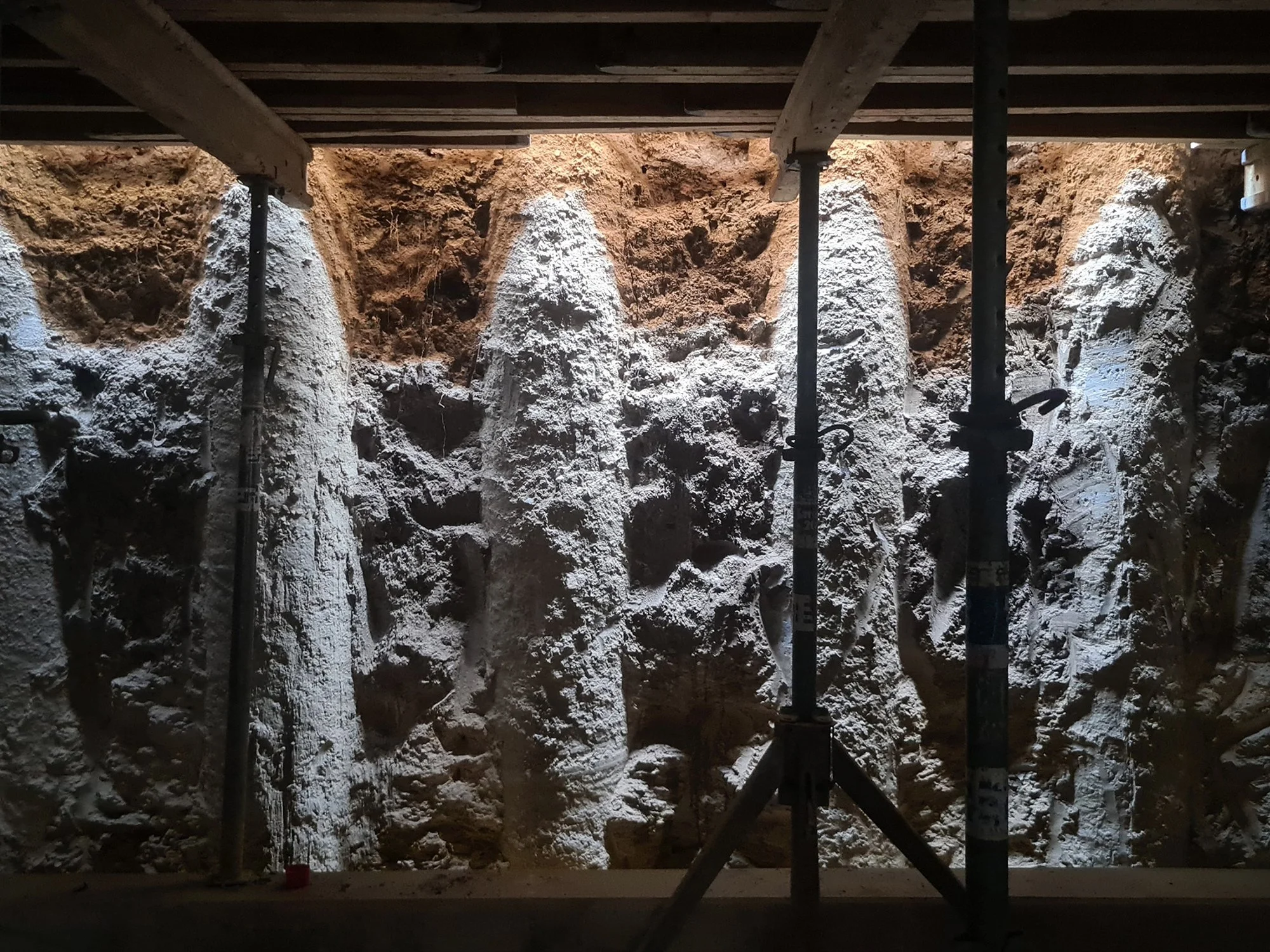
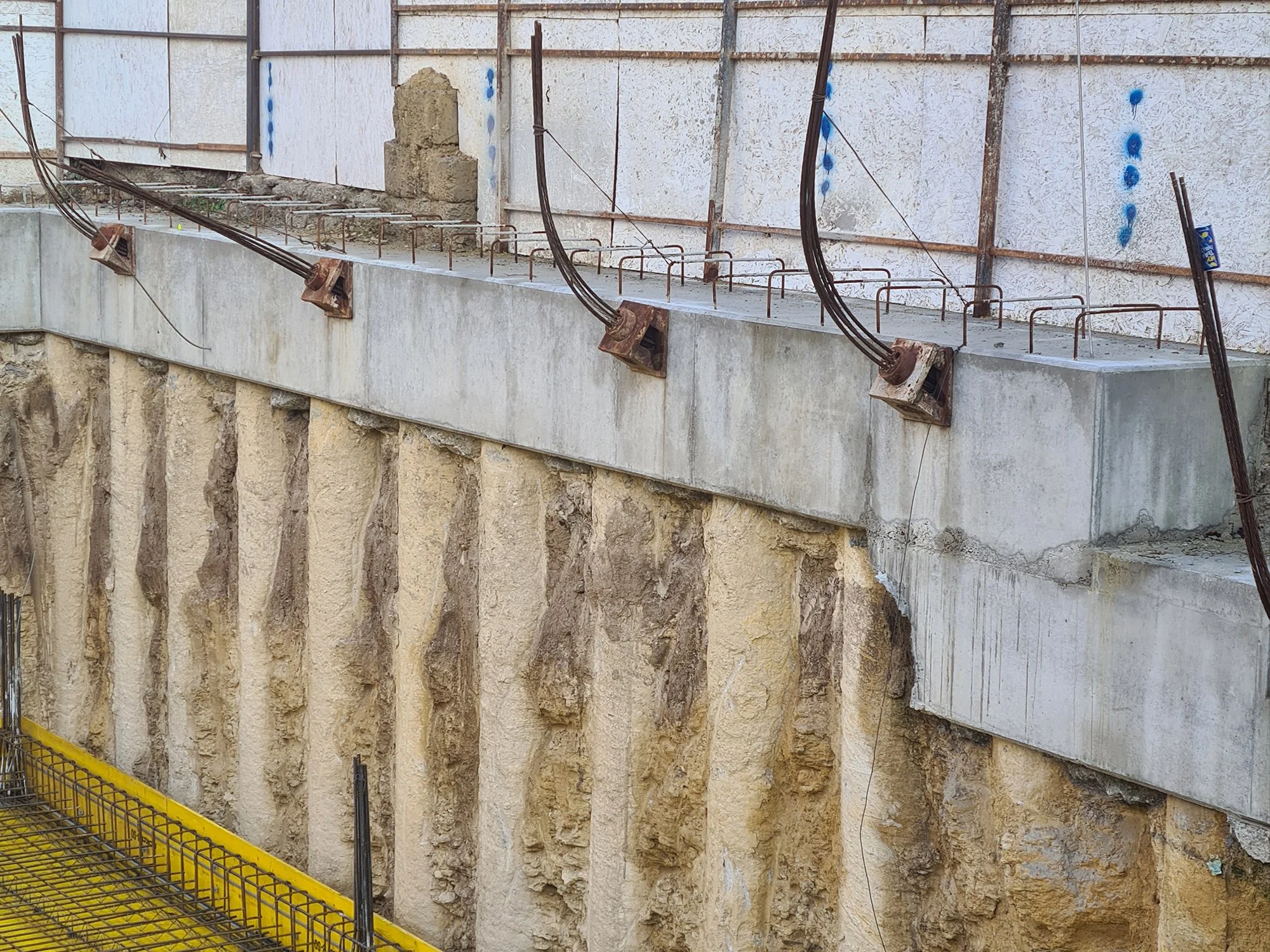
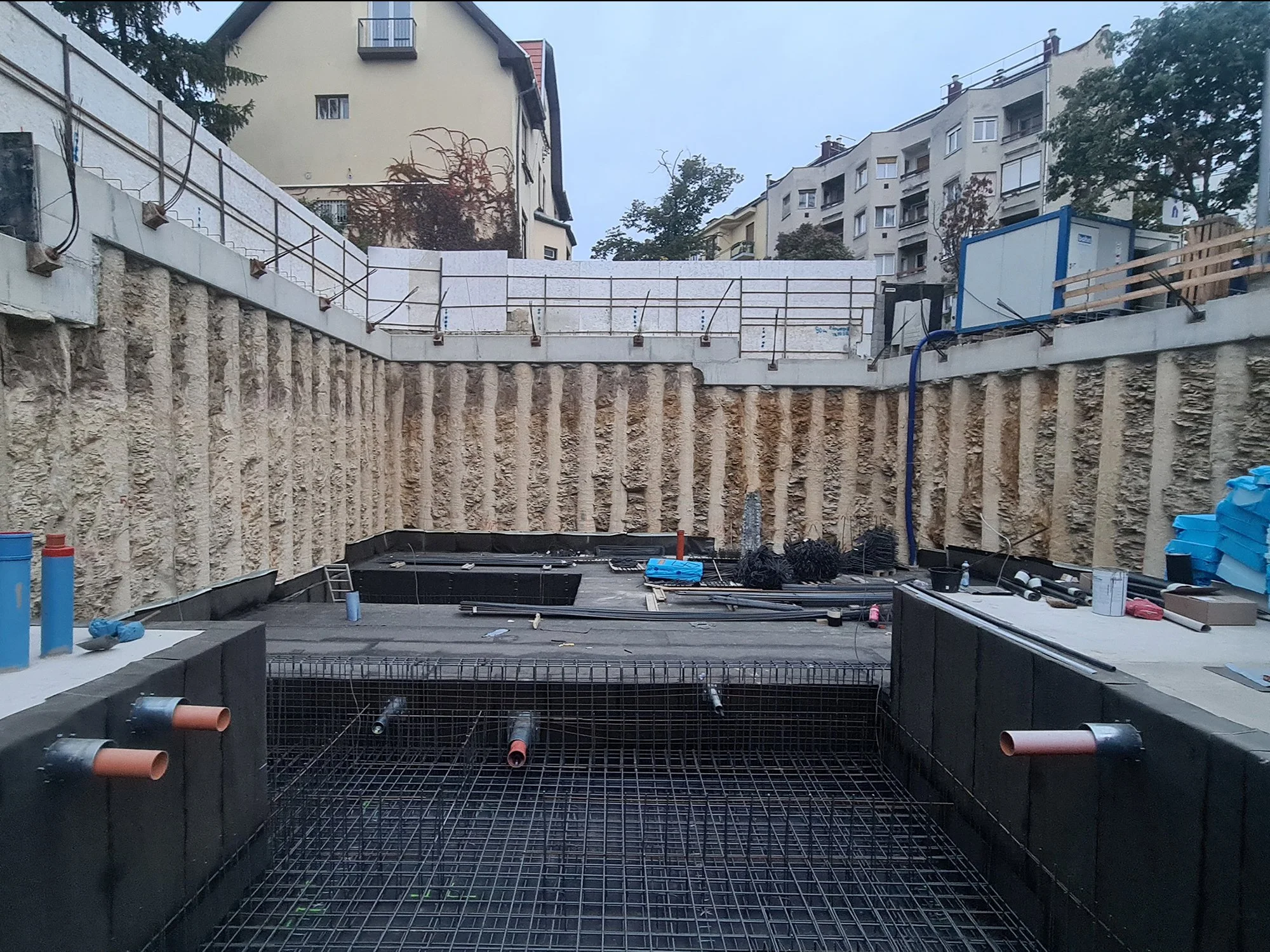
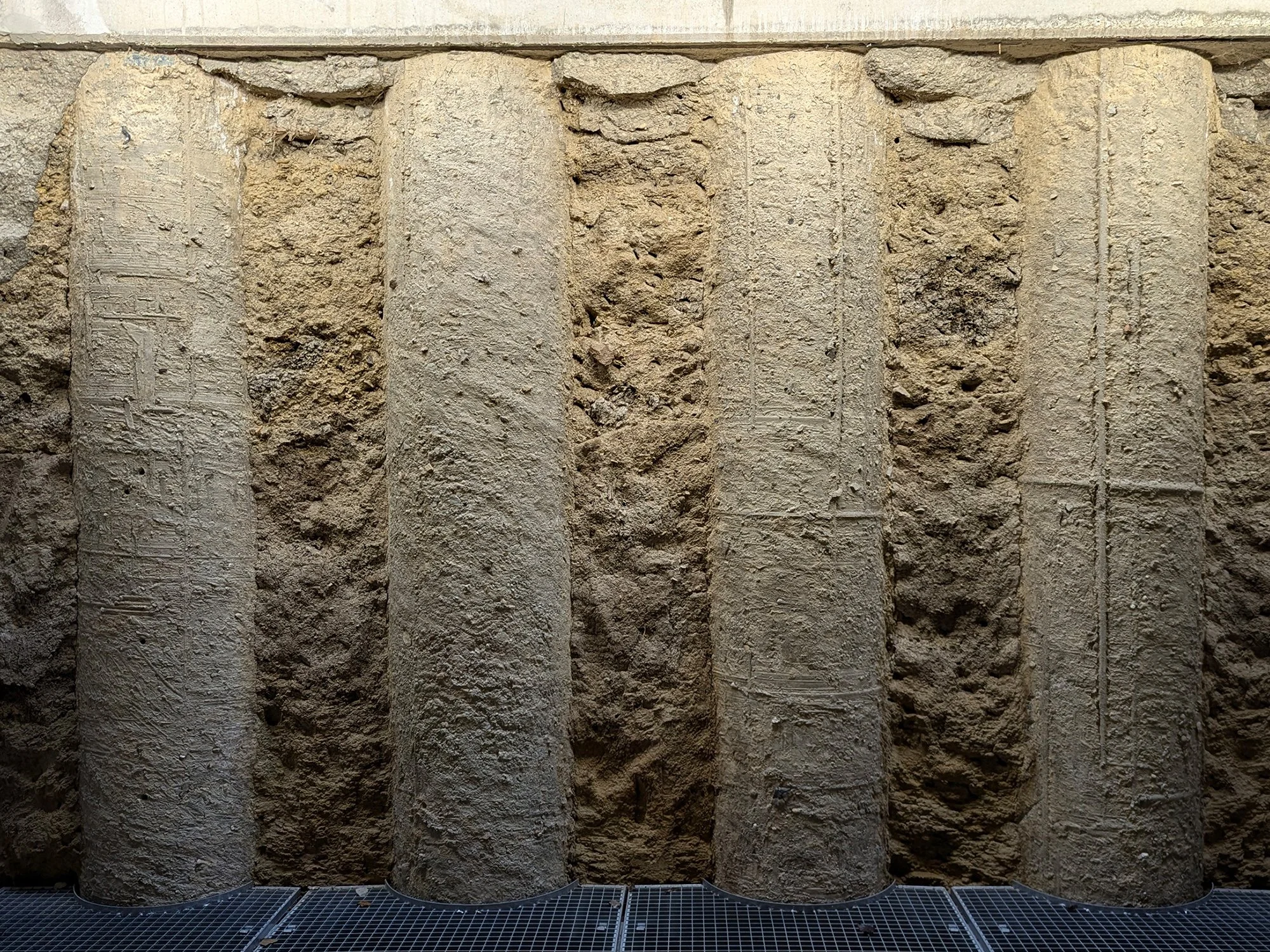
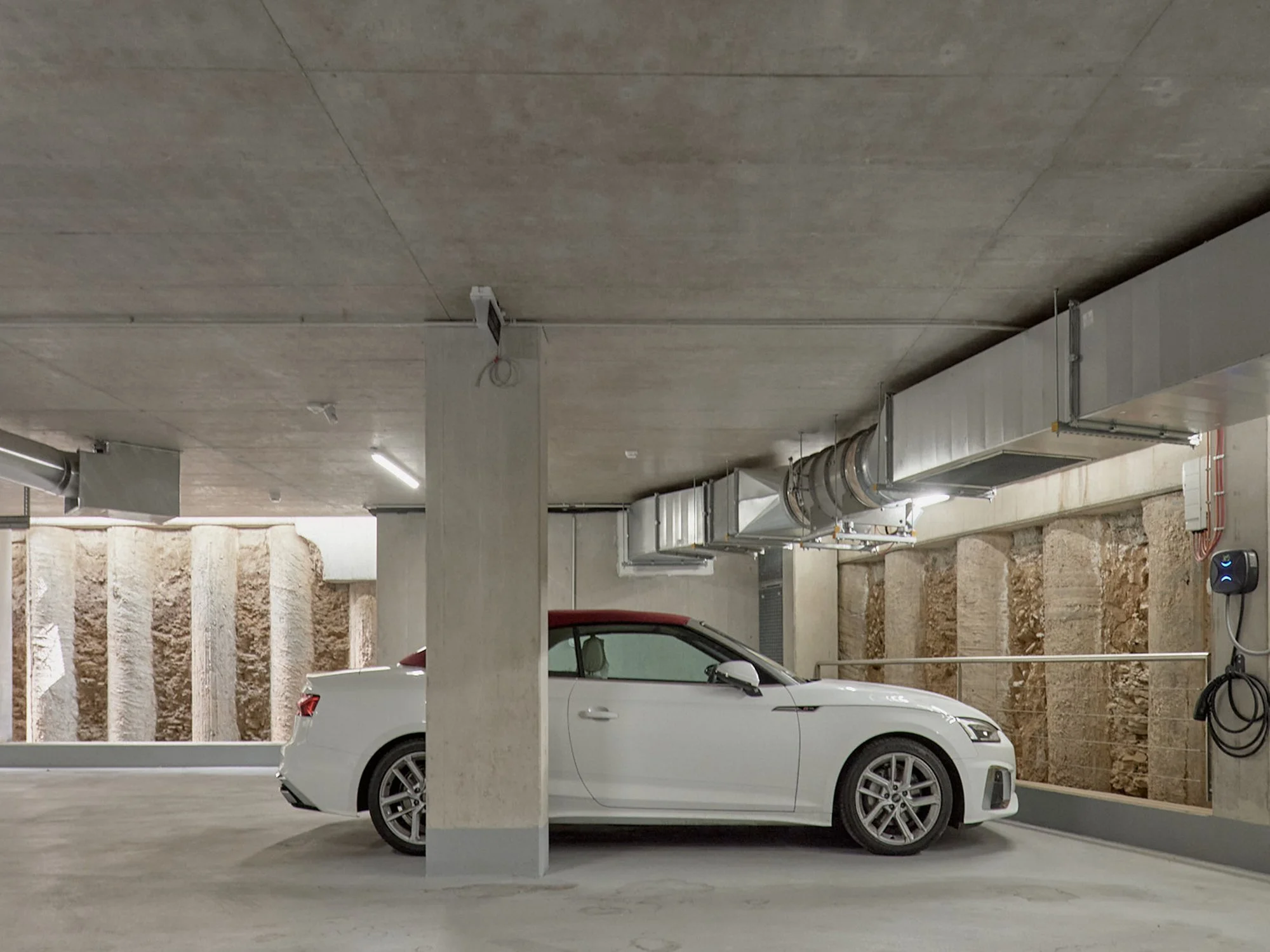
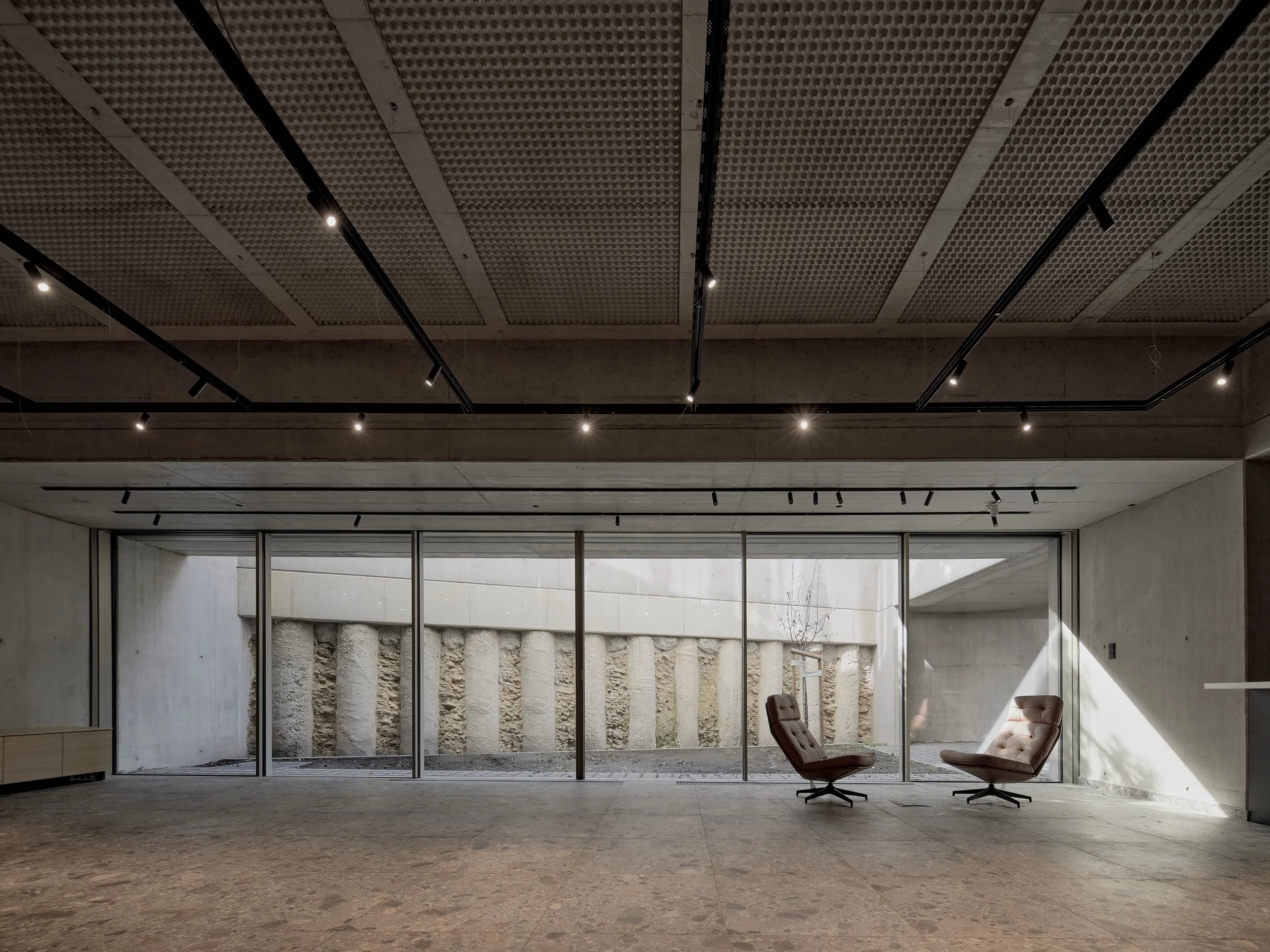
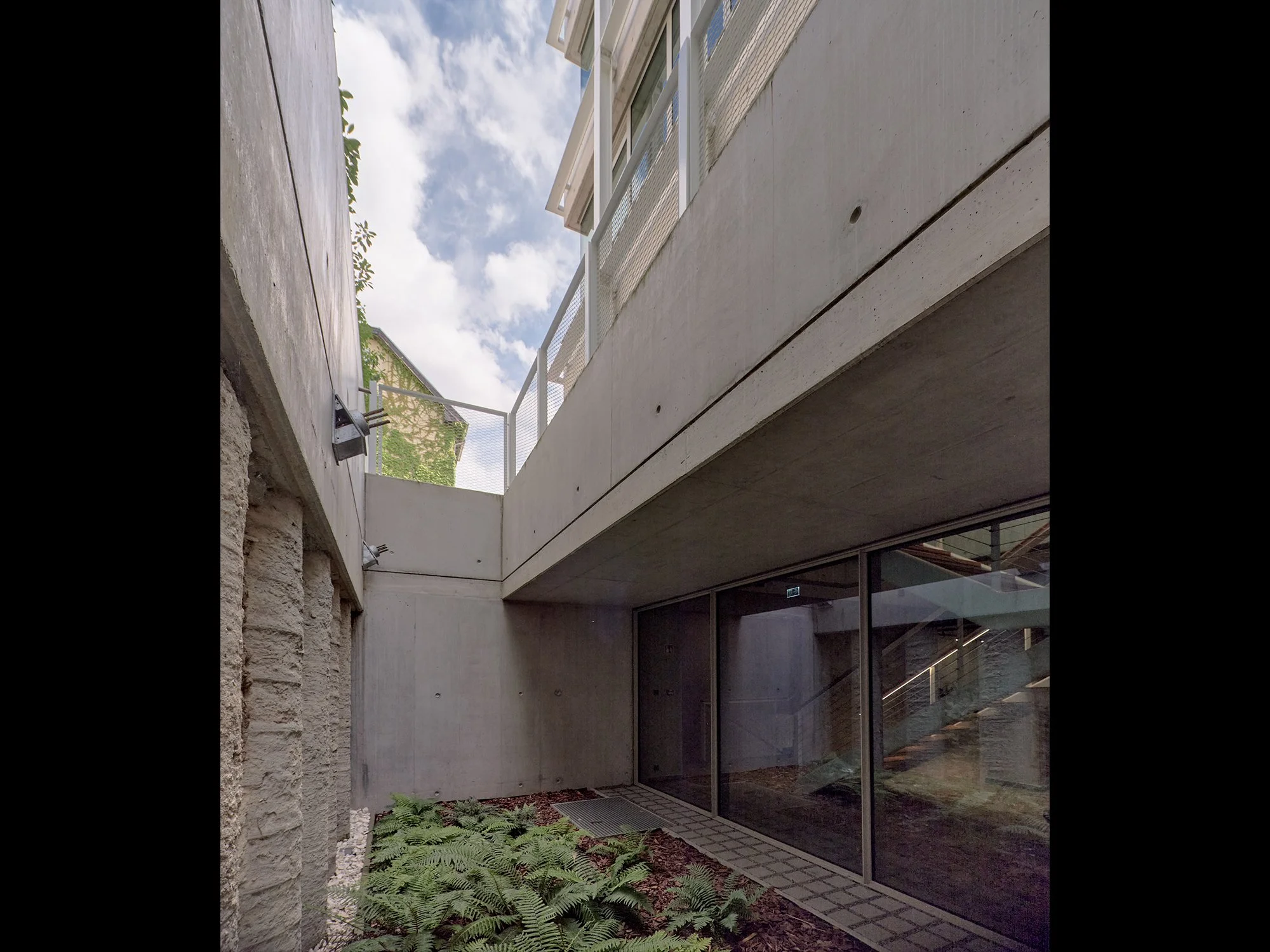
The contiguous pile wall reinforced with a header beam, which is built around the perimeter of the site is thus not only a temporary engineering and construction aid for the construction of the basement levels of the building, but also an architectural tool that is an integral part of the concept, whose significance goes beyond its primary, functional role and represents both the architectural and the personal character of the building. The "pit" provides space not only for the basement levels of the building, but also for a two-level garage accessible by car lift. The garage, a structure of reinforced concrete pillars and slabs, has no side walls and is not in direct contact with the piles on the edge of the site. The space between the two structures, which are about 60 cm apart, is open from above and provides natural light and ventilation. This vertical wall composed by the man-made concrete piles and the rock material left between them in their natural stratification has an elementary architectural character and force. The basement level of the building serves primarily as a flexible community space for staff and company social life. This space is visually and structurally completely open to the side courtyards, sunken below ground level and bordered by a pile built into the site boundary, thus becoming an integral part of everyday office life.
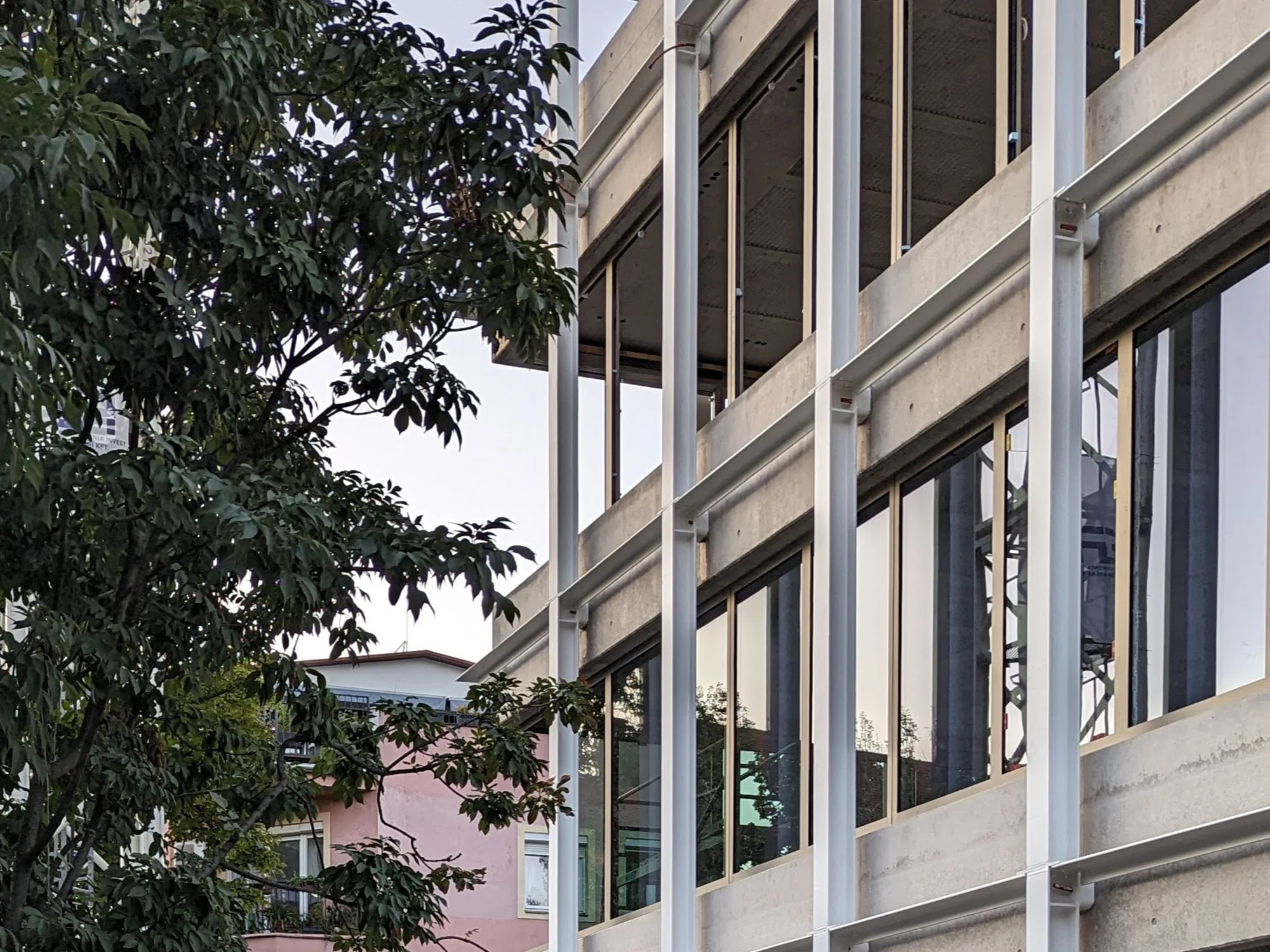
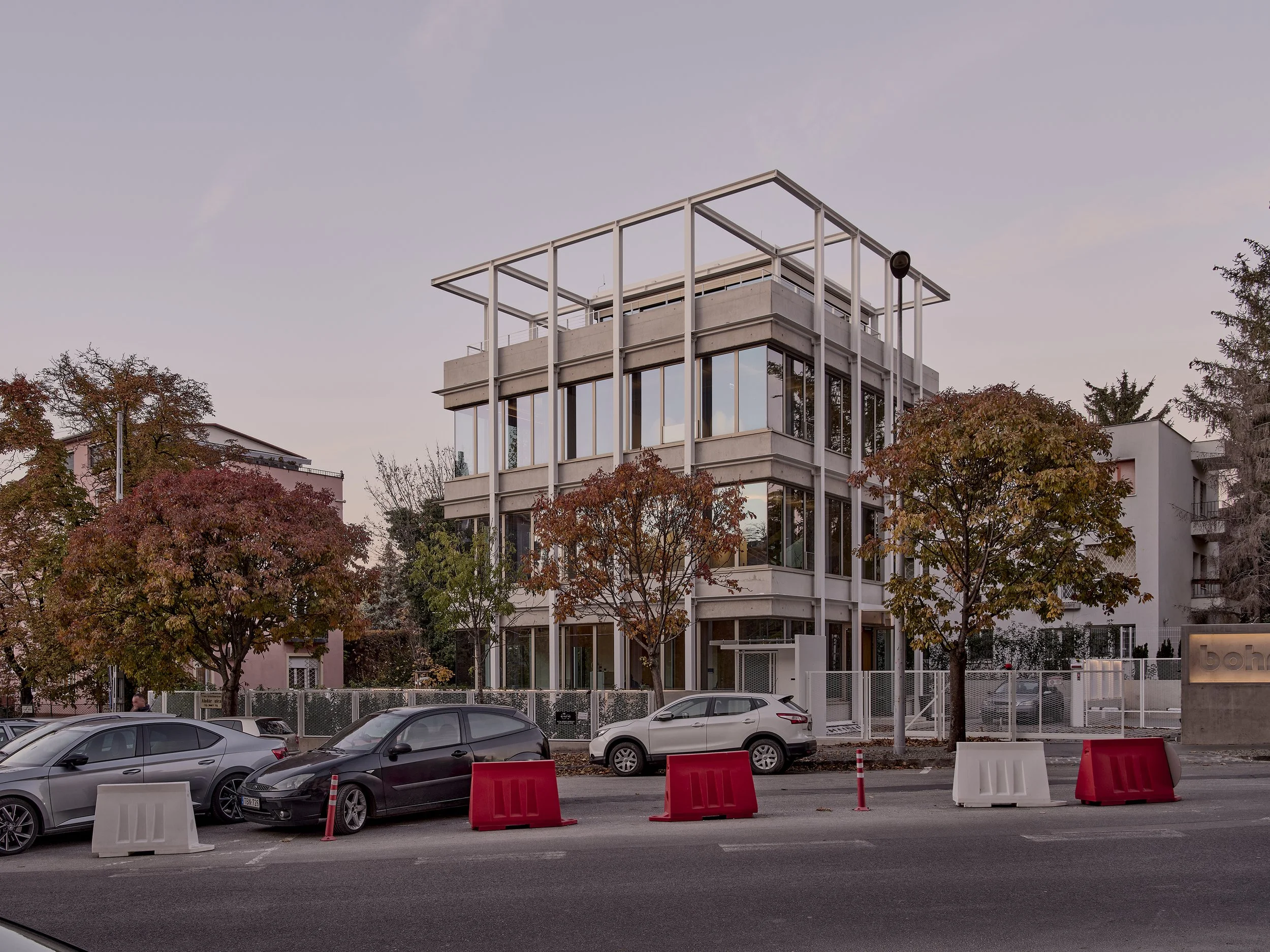
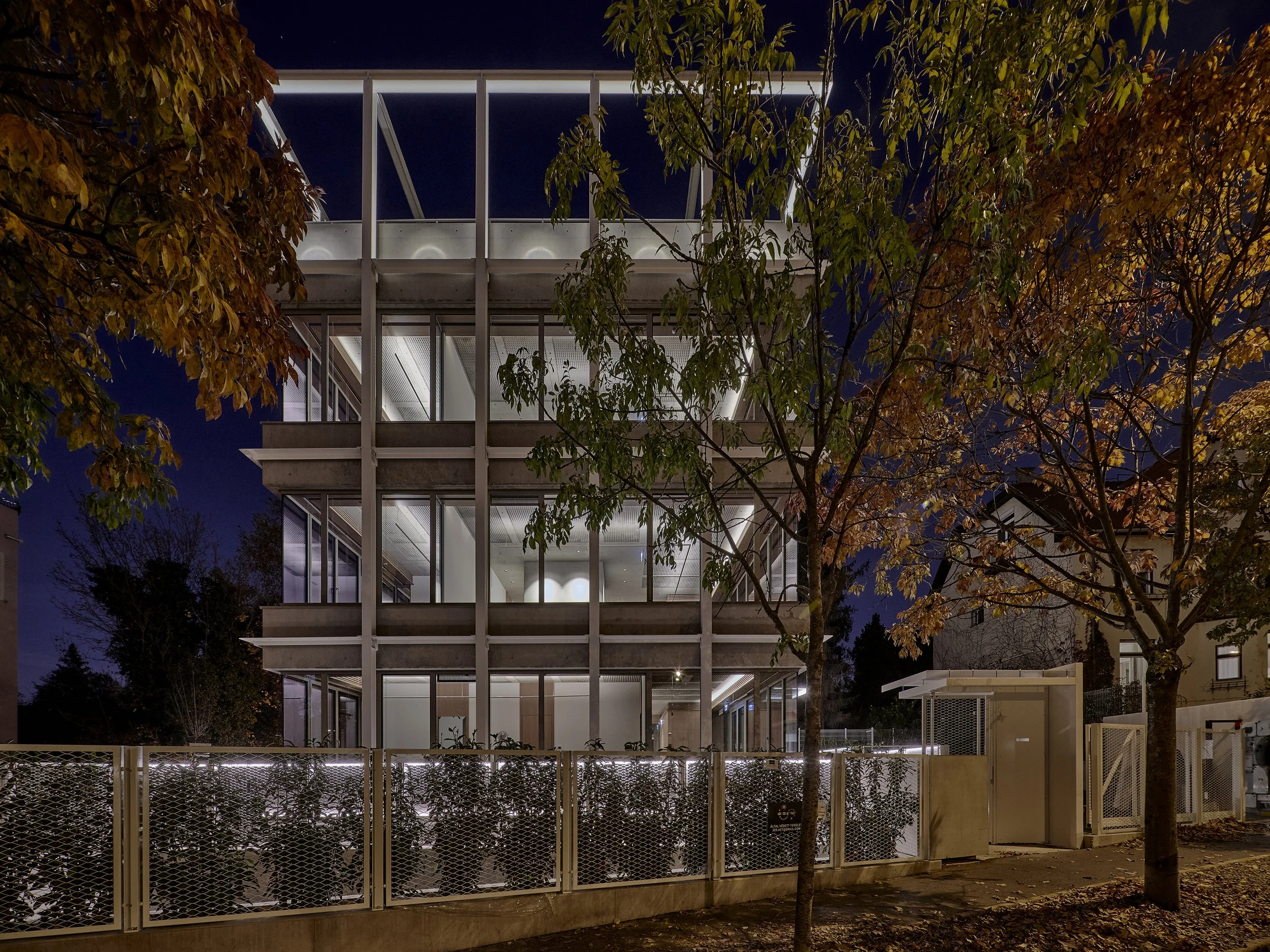
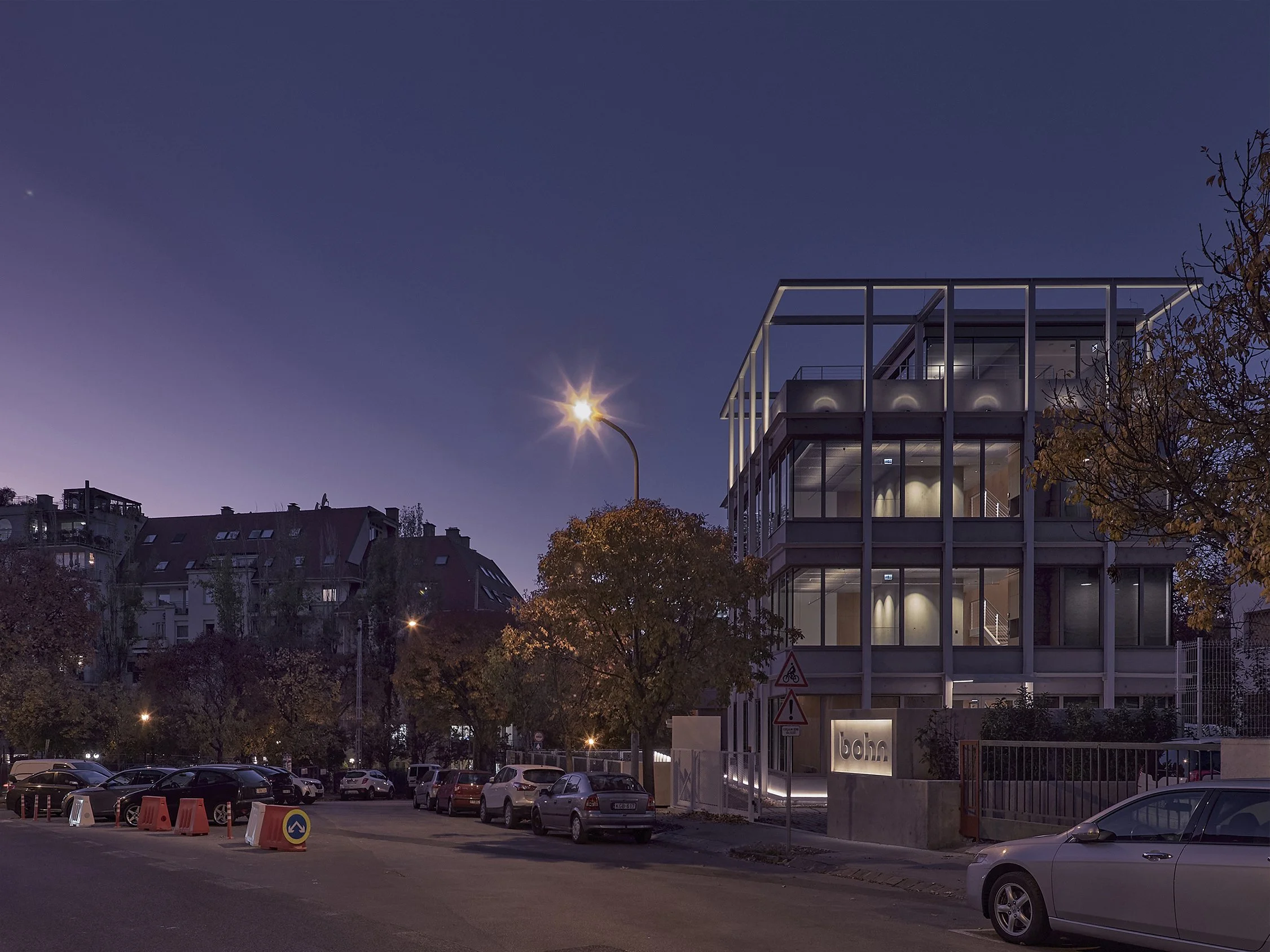
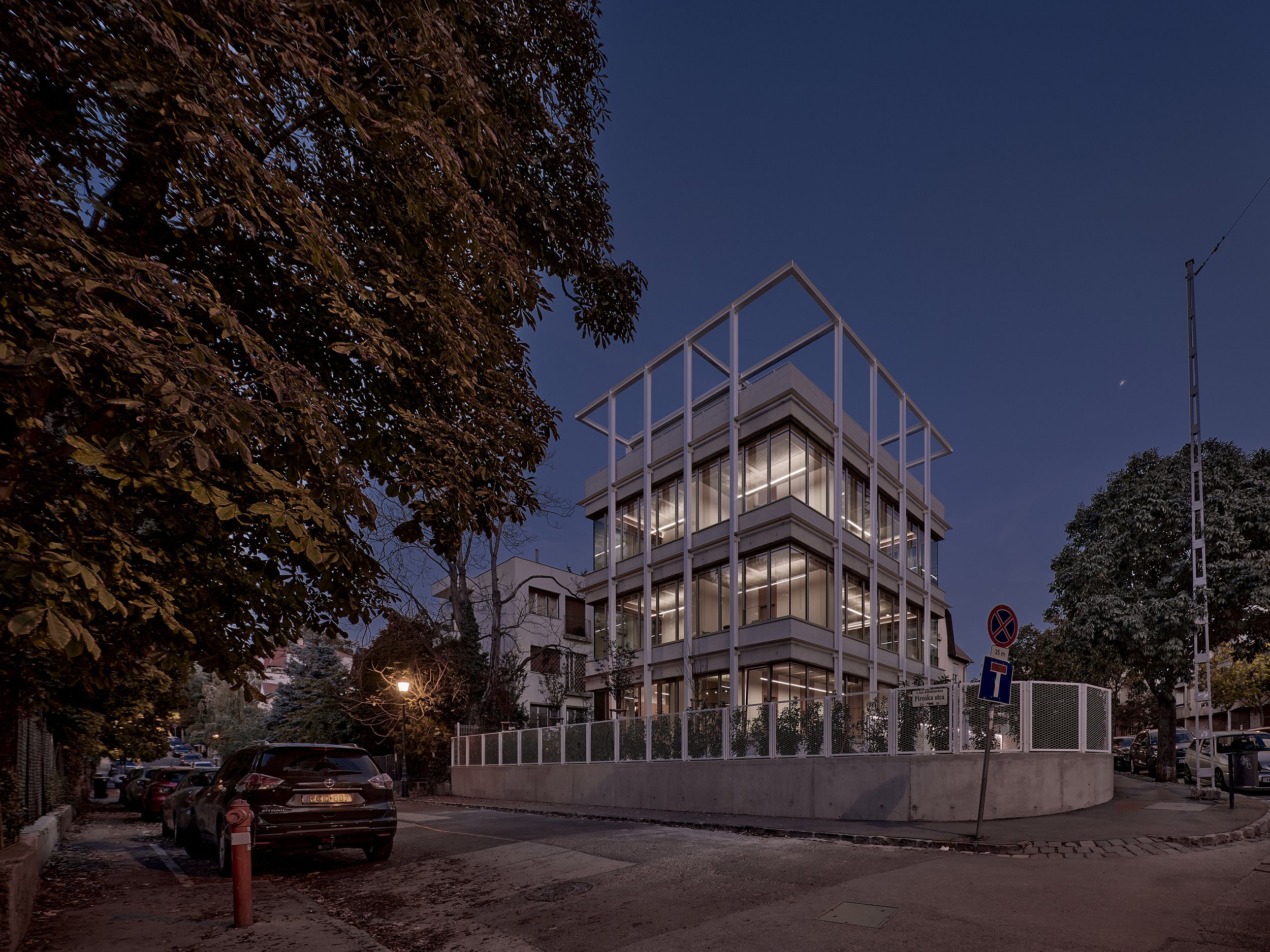
As evident as it was to formulate the substructure part based on the relationship of the civil engineering structures, it was more difficult to define the character of the above-ground facades, which are visible from the street and communicate with the outside, but derive and connected to the substructure. The design process has led step-by-step to the final solution, where the visible concrete structure and steel supporting columns form the façade of the building, without any other additions or cladding. Thus, at the inauguration ceremony marking the completion of the structure, the outside of the building was practically finished. After that, only the windows with high solar factor and energy-saving glazing completed the exterior.
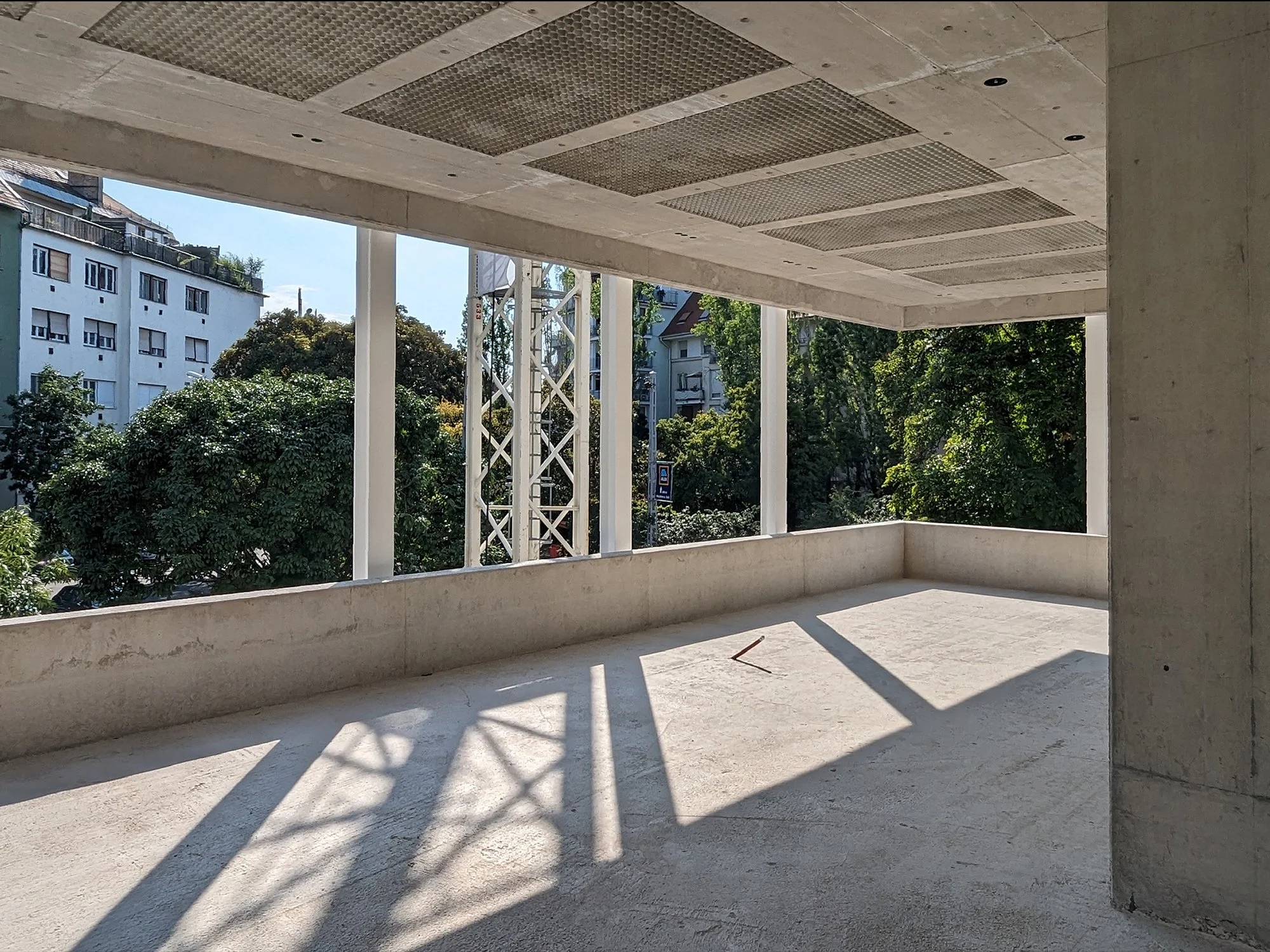
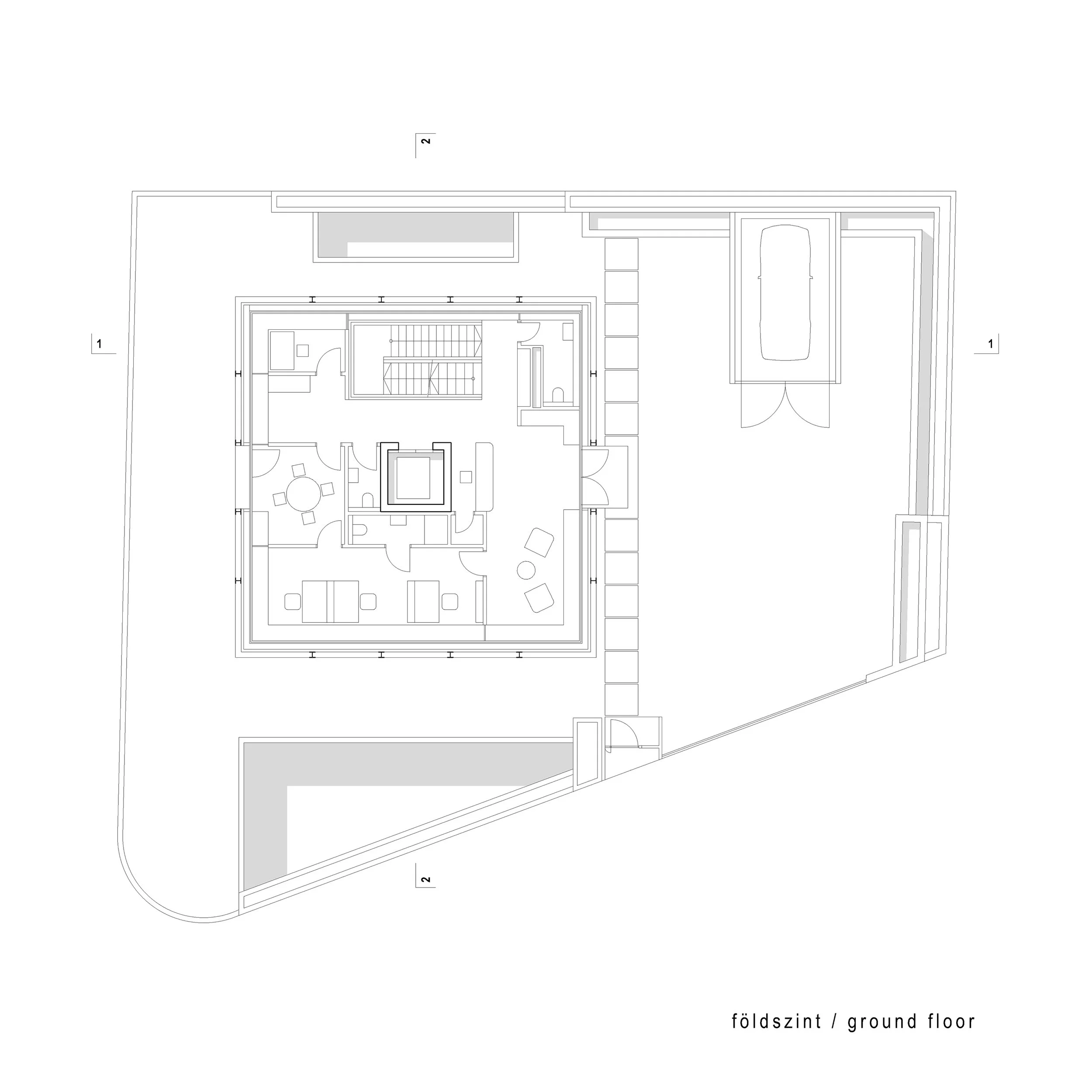
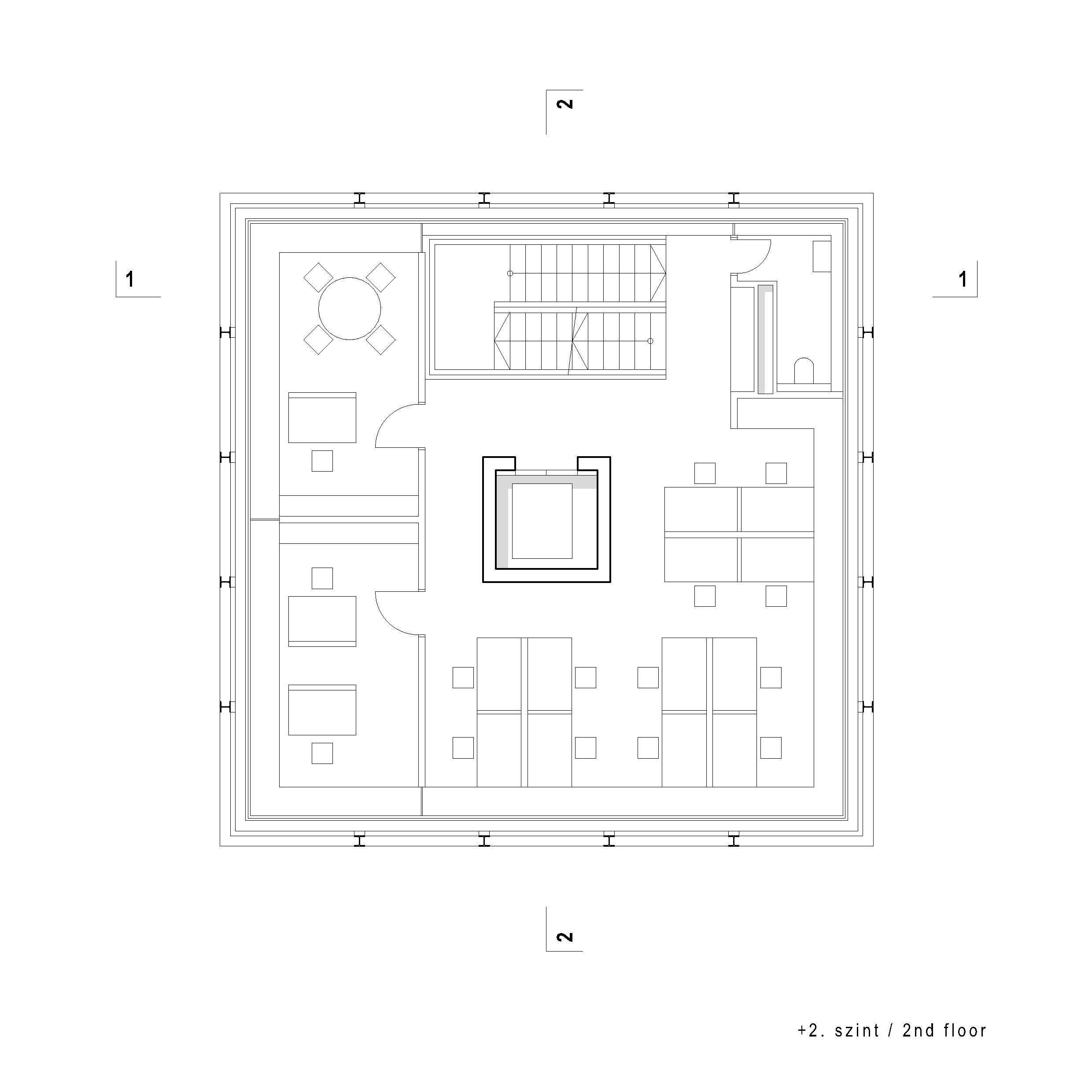
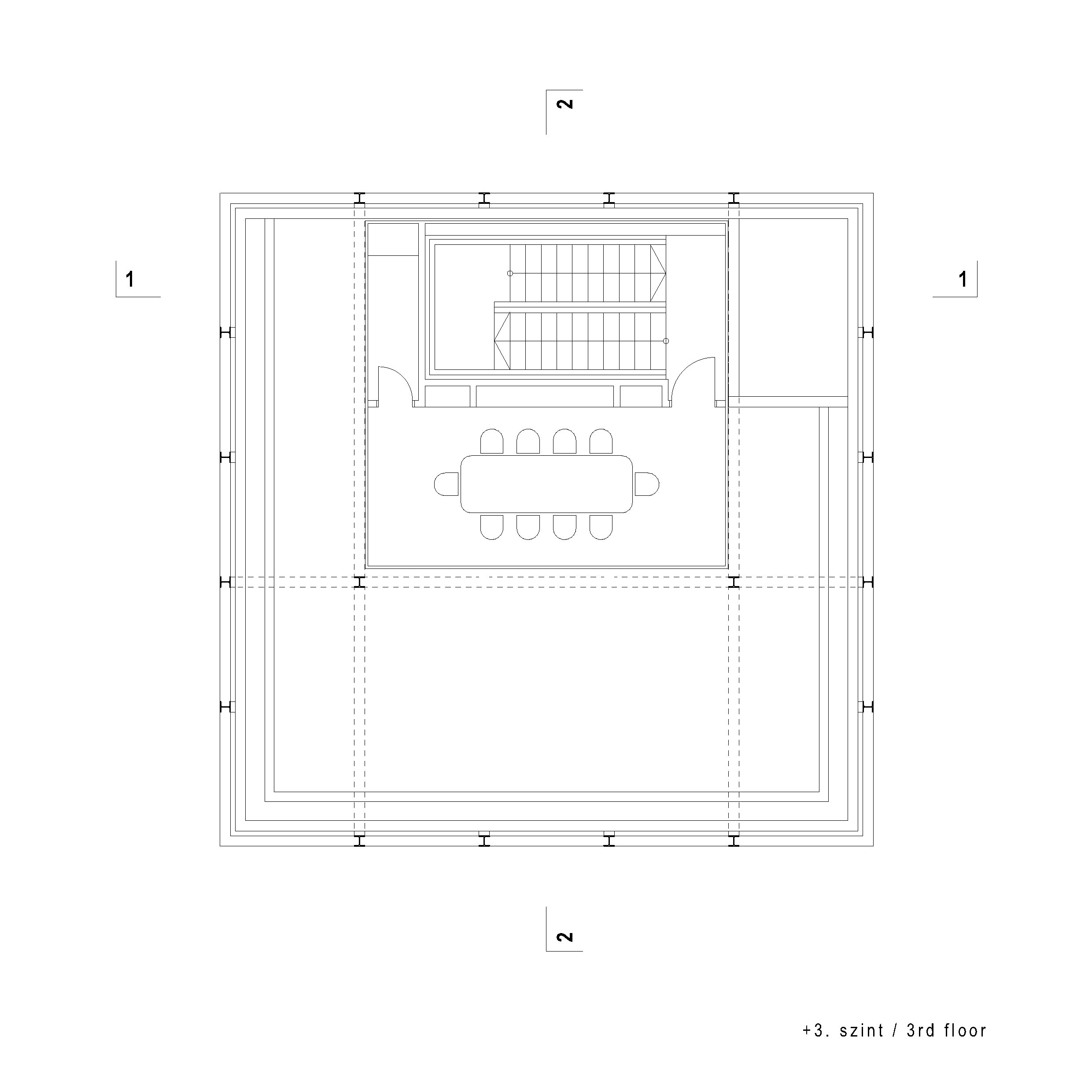
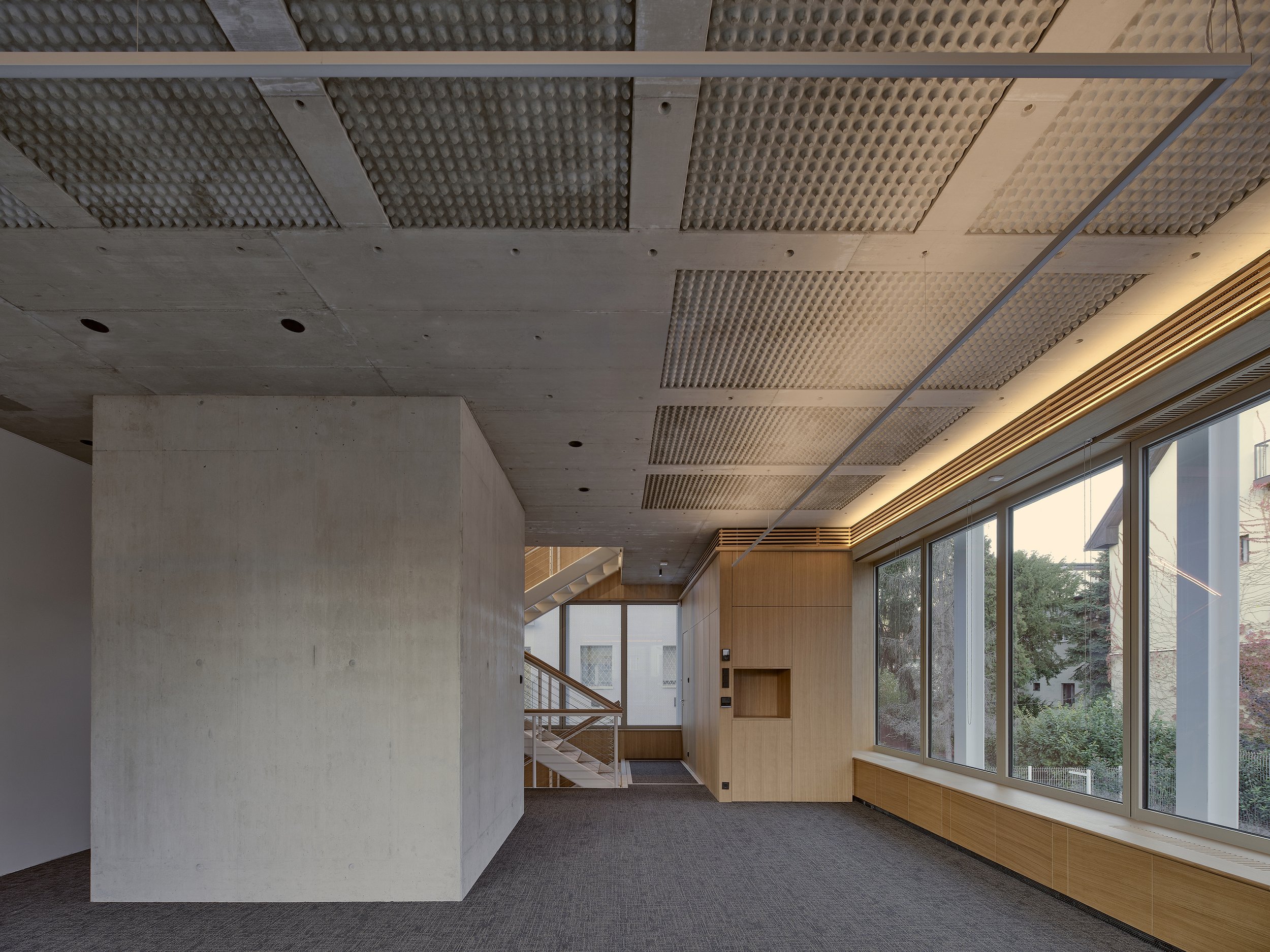
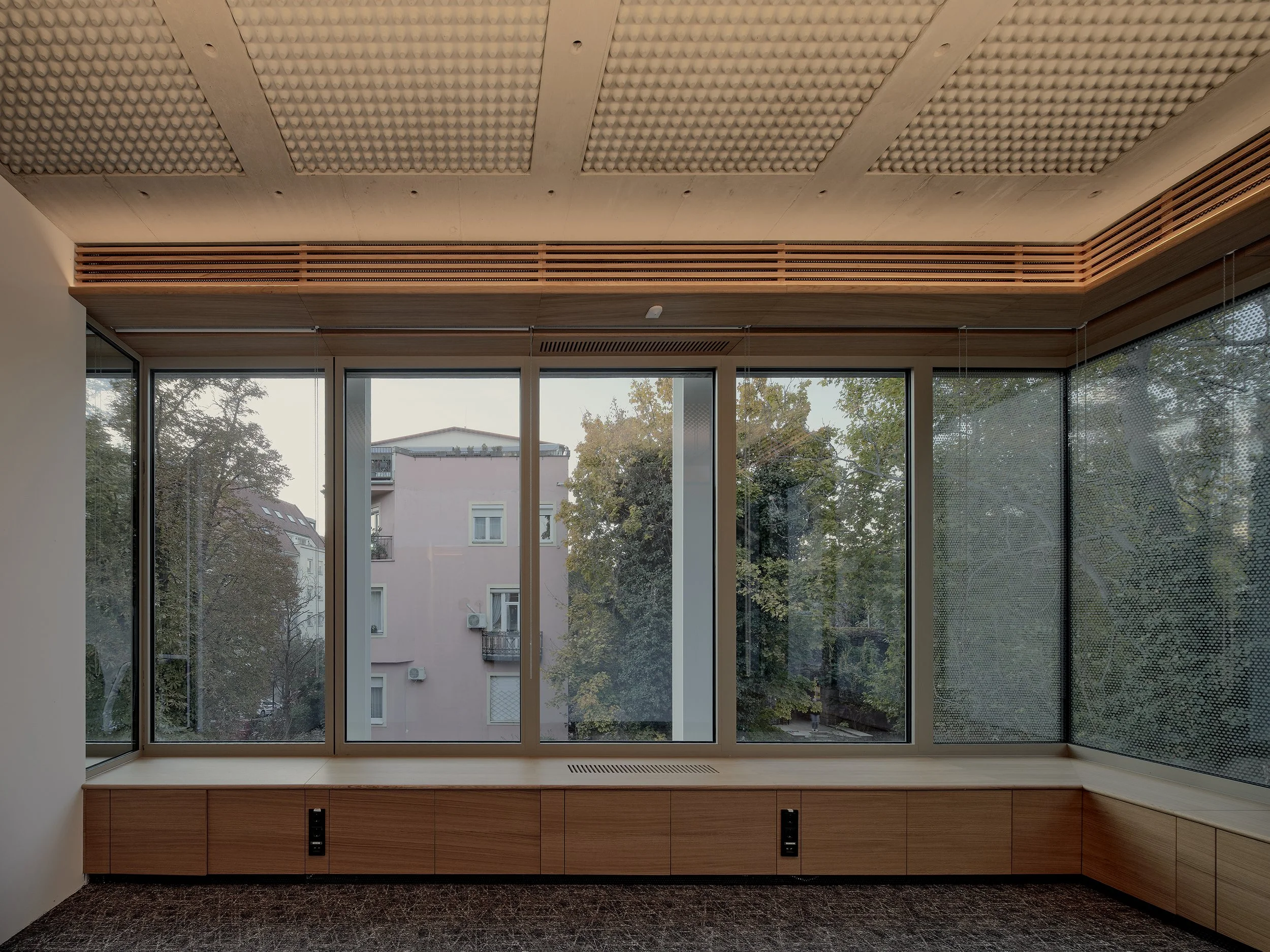
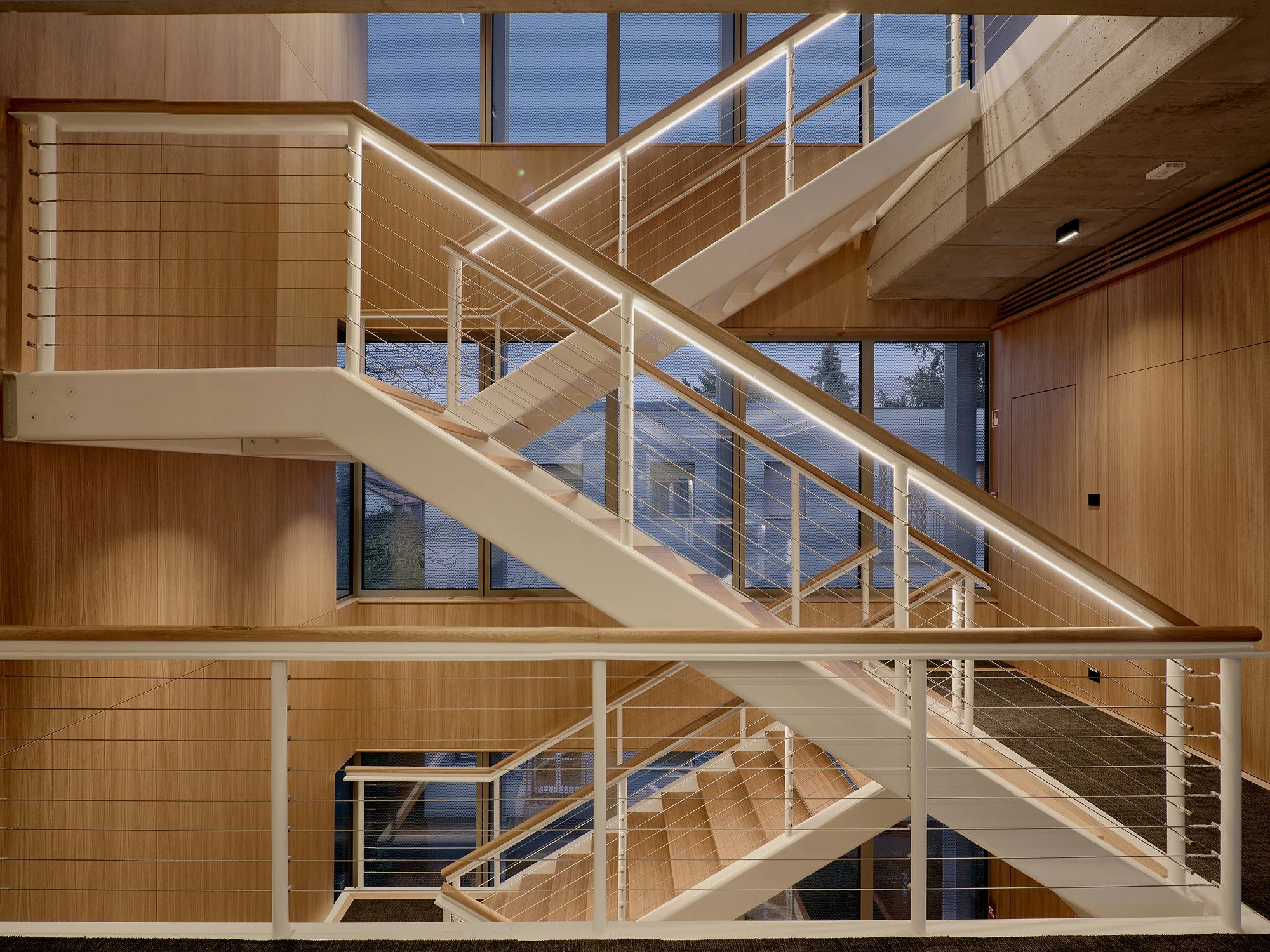
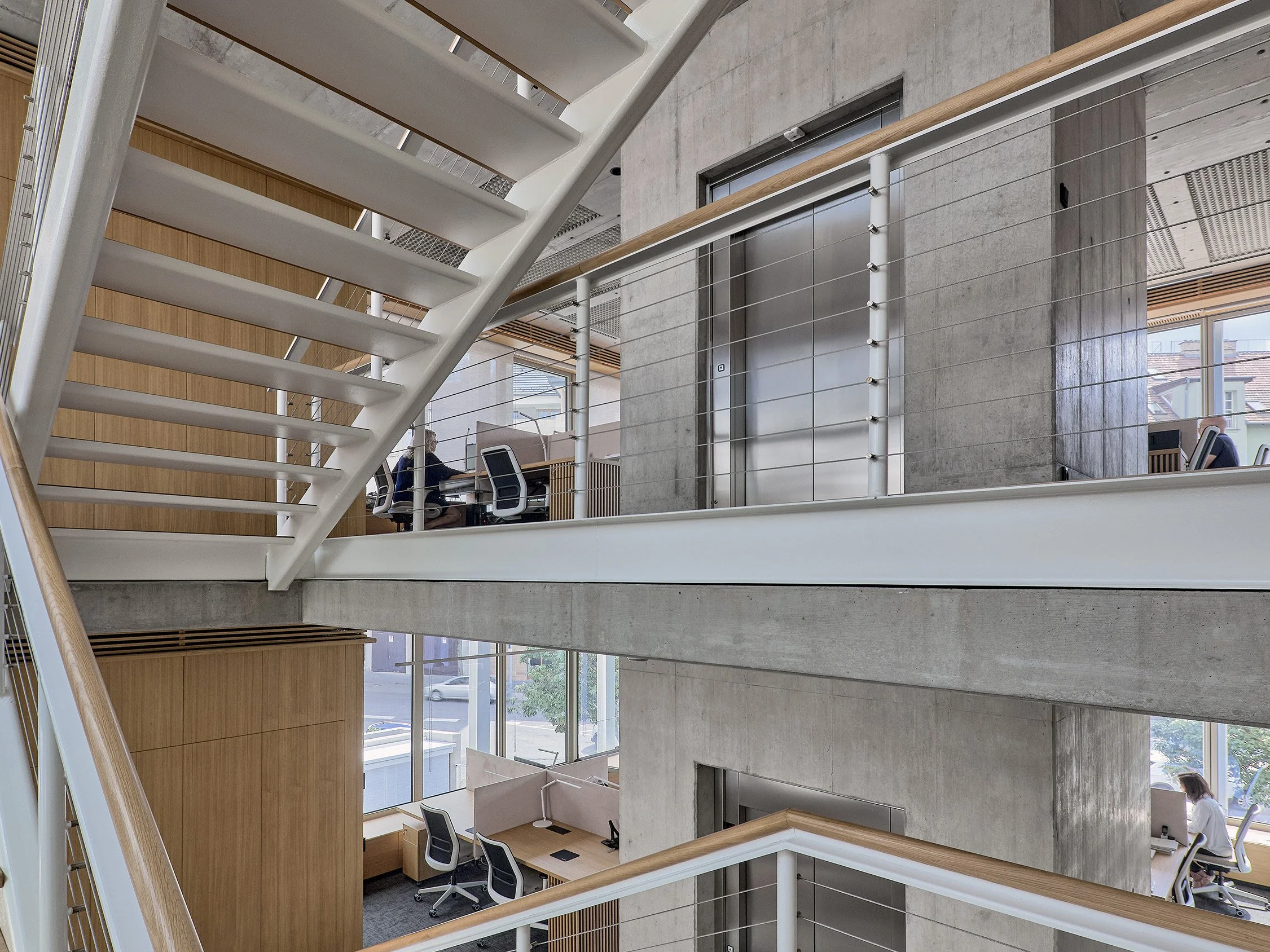
The regular square plan space of the above ground levels is organized around a central reinforced concrete core of the elevator. Four general levels including the ground floor and a recessed roof level provide offices and meeting rooms for the owners, as well as contractors and design staff. On the north side, a floating and open-worked staircase structure connects the levels functionally and visually while the rest of the space remains structurally open and continuous. The interior design and the use of materials counterpoint and significantly refine the harshness and austerity of the structural-architectural character. The walls of the washroom blocks are covered with oak veneer cladding, and wooden parapet furniture has been designed along the external facades to conceal the mechanical and electrical systems. In the office spaces, carpeted floors soften the space both visually and acoustically. The bottom of concrete slab structures is used as radiant cooling-heating heat exchangers. The effective surface area is increased in the zones above the workstations by using custom precast concrete panels with a drainage plate texture, placed in the formwork prior to concreting. This has an acoustic and interior design role in addition to energy optimisation.
Ventilation of the interior spaces is provided by decentralised exhaust fans on each floor, which constantly monitor the air quality of the rooms. Depending on the current use, the necessary amount of fresh air is provided by concealed ventilation slots in the windows. The decision not to install a large central air supply system with a network of vertical and horizontal internal air ducts and suspended ceiling systems as usual in similar office buildings was an important one from both design philosophy and an economic point of view. By using innovative solutions to the central air conditioning and cooling systems it has been possible to avoid the presence of mechanical equipment that disturbs the urban landscape or architectural appearance of the building or the surrounding residential area, without creating acoustic pollution.
Function: company headquarters, office building
Typology: new
Year of completion: 2025
Area: 1250 m²
Developer: Bohn Civil Engineering Ltd.
Architect: Bence Turányi
Project architect: Gábor Balla
Collaborators: Renáta Gyurcsó, Bálint Laczkó-Pető
Photographer: Zsolt Batár